Mastering the neutral spine is essential for proper Pilates form, injury prevention, and overall spinal health. This guide covers how to find and maintain a neutral spine for all skill levels, especially for those practicing Pilates in Miami’s vibrant wellness community.
Understanding the Neutral Spine in Pilates
What Is a Neutral Spine?
The term “neutral spine” refers to the natural alignment of your spine’s three curves: cervical (neck), thoracic (upper back), and lumbar (lower back). When these curves are in their ideal position, your spine is in its most stable and supported state. This position supports core engagement, reduces pressure on the joints, and allows for effective movement during Pilates exercises.
In Pilates, the neutral spine technique is fundamental. Whether you’re flowing through a series on the Reformer or working in a Pilates beginner class, your instructor will often cue you to find and maintain a neutral spine. This alignment ensures you’re activating the right muscles while protecting your back.
Why Neutral Spine Matters
Maintaining the correct spine position during Pilates is not just a matter of form—it’s about function and longevity. Here’s why the neutral spine is so important:
- Muscle Efficiency: A neutral spine allows your muscles to work more effectively, especially your core stabilizers.
- Injury Prevention: Misalignment can place unnecessary stress on the spine and joints, increasing the risk of injury over time.
- Postural Benefits: Practicing neutral spine Pilates regularly helps reinforce good posture in and out of the studio.
- Better Movement Patterns: Proper alignment supports functional movement, making everyday tasks easier and safer.
Neutral Spine vs. Imprinted Spine
In Pilates, you might also hear about the “imprinted spine,” where the lower back presses gently into the mat. This position can provide additional support for beginners or certain exercises. However, the neutral spine is generally preferred, especially in contemporary Pilates, because it reinforces natural alignment and encourages core muscle activation.
How to Find Your Neutral Spine
The Neutral Pelvis Connection
Finding a neutral spine starts with your pelvis. In Pilates, we often refer to the “neutral pelvis” because it forms the foundation for spinal alignment. When your pelvis is in a neutral position, your hip bones (also called the ASIS – anterior superior iliac spines) and your pubic bone form a level triangle, parallel to the floor when lying on your back.
To find this position:
- Lie on your back with your knees bent and feet flat on the floor, hip-width apart.
- Place your hands on your hips to feel the alignment between your hip bones and pubic bone.
- Gently tilt your pelvis forward and backward to explore the movement range.
- Settle into a position where the three bony landmarks are in a flat, level plane—this is your neutral pelvis and spinal neutral position.
Tips for Finding Neutral Spine While Standing
Neutral spine isn’t just for lying down—it applies to standing, sitting, and moving too. To find your neutral spine while standing:
- Stand with your feet hip-width apart, weight evenly distributed.
- Engage your core gently by drawing your navel toward your spine.
- Imagine a string pulling the crown of your head toward the ceiling to elongate your spine.
- Check that your shoulders are stacked over your hips, hips over knees, and knees over ankles.
This alignment forms the basis for many standing Pilates exercises and daily activities alike.
Using Props to Support Alignment
When you’re just getting started, props can help you find the correct spine position. A small towel or cushion placed under the lower back can help you feel the space that should exist in a neutral spine. For more hands-on guidance, consider exploring private Pilates sessions at Backstage Pilates in Miami.
Neutral Spine on the Reformer
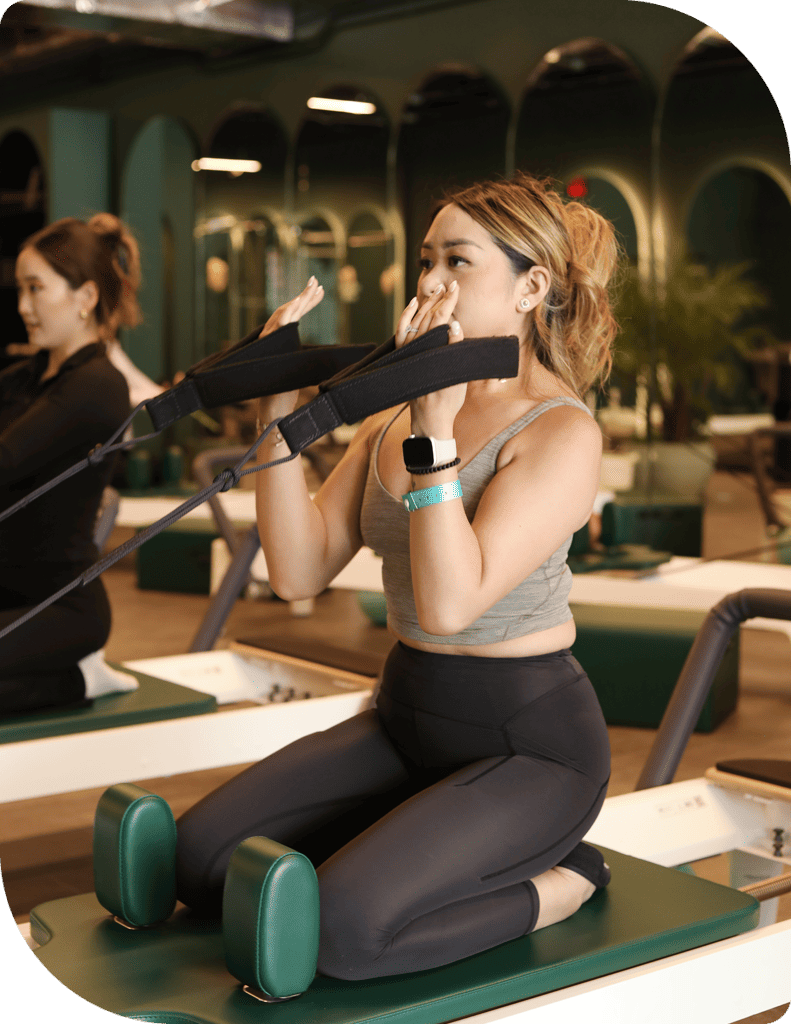
The Reformer adds resistance and movement to your Pilates practice, making spinal alignment even more critical. In a Reformer Pilates class, instructors guide you to maintain a neutral spine while performing leg presses, arm work, and core-focused movements. The moving carriage challenges your stability, deepening your awareness of spinal alignment.
How to Maintain a Neutral Spine in Pilates Practice
Engage the Deep Core Muscles
One of the best ways to maintain a neutral spine is by strengthening your deep core muscles, especially the transverse abdominis and pelvic floor. These muscles act like a corset, supporting your spine from the inside out.
To activate these muscles:
- Inhale to prepare and exhale slowly.
- Draw your belly button gently toward your spine without flattening your back.
- Lift through your pelvic floor as if stopping the flow of urine.
This subtle engagement helps stabilize your entire trunk and supports your spine throughout movement.
Using Breath to Support Alignment
Pilates breath is essential not just for oxygenation but also for spinal support. Coordinating breath with movement helps maintain core engagement and correct spine placement.
Here’s how:
- Inhale through your nose to expand the ribs sideways and into the back.
- Exhale through pursed lips as you engage the core and maintain your neutral alignment.
Breath cues are a big part of all classes, from intermediate Pilates to Pilates stretch sessions.
Mind-Body Awareness and Body Scanning
Maintaining a neutral spine is not a one-time adjustment—it requires ongoing awareness. During your Pilates practice, scan your body regularly:
- Are your shoulders relaxed and away from your ears?
- Is your pelvis level and not tilted?
- Are you holding tension in your neck or jaw?
Developing this mindfulness helps you adjust your posture throughout the class and translates into better alignment during daily life in Miami’s active lifestyle.
Common Mistakes to Avoid
Even seasoned practitioners can slip out of alignment. Here are a few common mistakes to watch for:
- Overarching the lower back: This often happens when trying to “lift” the chest too much.
- Flattening the back completely: This removes the natural lumbar curve and disengages your stabilizers.
- Tilting the pelvis: Anterior or posterior tilts pull your spine out of neutral.
- Bracing too hard: Over-contracting the abs can restrict breath and movement.
To avoid these, consider joining one of our Pilates classic beginner classes at Backstage Pilates, where form and technique are the focus.
Top Neutral Spine Exercises for Practice
Pelvic Tilts
Pelvic tilts are a foundational exercise for finding spinal neutral position. They increase awareness of how your pelvis and lower back move together.
How to do it:
- Lie on your back, knees bent, feet flat.
- Inhale to prepare, then exhale as you tilt your pelvis to flatten your lower back into the mat.
- Inhale to return to neutral.
- Repeat 8–10 times to explore the range and find your center.
Toe Taps
This is an excellent core exercise to reinforce spinal alignment while strengthening deep stabilizers.
How to do it:
- Lie on your back with knees in tabletop position.
- Find your neutral spine.
- Exhale as you lower one foot to tap the mat, keeping the pelvis stable.
- Inhale to return and repeat on the other side.
Bridges
The bridge strengthens glutes and hamstrings while promoting awareness of spinal articulation.
How to do it:
- Start in neutral spine with feet hip-distance apart.
- Exhale to press into your feet and lift your hips one vertebra at a time.
- Inhale at the top, then exhale to roll down slowly, returning to neutral.
Quadruped Arm/Leg Reach (Bird Dog)
This exercise challenges core stability and reinforces correct spine position during movement.
How to do it:
- Start on all fours with wrists under shoulders, knees under hips.
- Find a neutral spine and engage your core.
- Extend opposite arm and leg while keeping the spine stable.
- Hold for a breath, then return and switch sides.
Wall Alignment Check
Use a wall to practice neutral spine standing:
- Stand with your back against a wall—heels, hips, shoulders, and head touching.
- There should be a small space between your lower back and the wall.
- If you can slide your hand in and out easily, you’re in neutral alignment.
This is a simple way to practice at home, especially for those balancing busy Miami lifestyles with wellness goals.
Incorporating Neutral Spine into Daily Life
Pilates spinal alignment isn’t just for the studio. By practicing neutral spine exercises regularly, you’ll start to carry that awareness into your everyday movements—whether you’re commuting in South Florida traffic, working remotely, or enjoying a beachside workout.
For ongoing practice and expert guidance, check our schedule and join one of our group classes or corporate Pilates programs.

Adapting Neutral Spine for Different Body Types and Conditions
Neutral Spine for Beginners
If you’re new to Pilates or just starting your fitness journey, finding and maintaining a neutral spine may feel unfamiliar. That’s completely normal. For beginners, the focus should be on building awareness and gradually developing strength in the muscles that support spinal alignment.
A great way to start is with slower-paced, technique-focused sessions like our Pilates classic beginner classes. These classes prioritize foundational skills, and our instructors provide clear, hands-on guidance to help you develop proper spinal alignment from the start.
Tips for Beginners:
- Use mirrors or video feedback during practice to visualize your posture.
- Don’t rush. Focus on form over repetition or intensity.
- Ask your instructor for specific cues or tactile feedback if you’re unsure about your alignment.
Spinal Alignment for Different Body Types
Every body is different, and what feels like a neutral spine for one person might be slightly different for another. Factors like natural spinal curvature, hip structure, and muscle imbalances can affect your alignment.
At Backstage Pilates, our instructors are trained to personalize your experience and help you find your unique spinal neutral position. Whether you’re tall, petite, curvy, or lean, a neutral spine is about *your* natural alignment—not someone else’s.
For Hyperlordosis (Excessive Lumbar Curve):
- Focus on engaging the deep core and glutes to reduce excessive arching.
- Breathe into the lower ribs to lengthen the lumbar spine.
For Flat Back Posture:
- Work on improving thoracic mobility to restore natural spinal curves.
- Use props like a foam roller to release tight muscles that restrict movement.
Neutral Spine During Pregnancy
Pregnancy changes your center of gravity and pelvic alignment, which can affect how you find and maintain a neutral spine. During this time, it’s crucial to avoid excessive spinal extension and focus on safe, supportive exercises.
Our prenatal and postnatal Pilates classes are specifically designed to support spinal health and pelvic stability throughout and after pregnancy. Certified instructors guide you through gentle movements that honor your body’s changes while reinforcing alignment.
Tips for Prenatal Practice:
- Use props like bolsters and pillows for extra support.
- Focus on breathing and pelvic floor engagement.
- Avoid supine (lying flat) positions after the first trimester unless modified.
Neutral Spine for Desk Workers and Sedentary Lifestyles
If you spend much of your day sitting—whether at an office or working remotely in sunny Miami—your posture can suffer. Prolonged sitting often leads to tight hip flexors, weak glutes, and poor spinal alignment.
Incorporating daily neutral spine exercises can counteract these effects. Just 10–15 minutes a day of mindful movement can make a significant difference.
At-Home Neutral Spine Practices:
- Take standing breaks every 30–60 minutes and do a wall alignment check.
- Try seated pelvic tilts at your desk to maintain mobility.
- Practice deep breathing to activate your core and release tension.
Progressing Your Practice with Neutral Spine
From Mat to Reformer: Advancing with Confidence
Once you’ve become comfortable maintaining neutral spine alignment on the mat, you can start progressing to more dynamic movements and equipment-based classes. The Reformer, Tower, and Jumpboard are all excellent tools for challenging spinal stability and body control.
In classes like Pilates Power or Cardio Jumpboard, maintaining neutral spine becomes more challenging—and more rewarding. You’ll be moving with greater resistance and speed, which requires deeper engagement of your stabilizing muscles and enhanced awareness of your alignment.
Progressive Reformer Tips:
- Begin each session by checking your neutral spine and adjusting before movement begins.
- Use lighter springs initially to prioritize form over force.
- Ask your instructor for feedback on your alignment during transitions and dynamic moves.
Incorporating Props for Challenge and Support
Props aren’t just for beginners—they’re powerful tools to deepen your practice. Items like Pilates rings, resistance bands, stability balls, and foam rollers can enhance your ability to maintain spinal alignment under new challenges.
Advanced Prop-Based Neutral Spine Exercises:
- Foam Roller Balance: Lie lengthwise on a foam roller and try to maintain neutral spine as you perform arm and leg movements.
- Magic Circle Presses: Use the ring between ankles or thighs to engage the inner thighs and support pelvic alignment.
- Mini Ball Under Sacrum: This adds instability, forcing your core to work harder while maintaining correct spine position.
Building Endurance in Alignment
It’s one thing to find a neutral spine at the start of class—it’s another to maintain it through a 50-minute session. Building endurance requires consistent practice and progression.
Try attending a variety of class styles to train your body in different movement contexts. For example, a Pilates stretch class can help improve mobility and keep your spine supple, while a classic intermediate class reinforces stability through more complex sequences.
Tips for Long-Term Alignment Success:
- Stay consistent with your practice—2–3 times a week is ideal.
- Mix up your class types to challenge your alignment in different ways.
- Keep a journal or notes on exercises that help you feel most aligned.
Expert Teaching Makes the Difference
Why Instructor Guidance Matters
While you can practice neutral spine Pilates at home, nothing compares to the real-time feedback and personalized instruction you get in a professional studio setting. Our instructors at Backstage Pilates are certified experts who understand the nuances of spinal alignment and how to cue it effectively for all body types.
Whether you’re recovering from an injury, pregnant, or looking to refine your technique, our team can help you reach your goals safely and effectively.
Personalized Sessions for Targeted Support
In a private training session, your instructor will assess your posture, movement patterns, and flexibility to guide you through a customized program. This is especially beneficial if you’ve struggled with back pain, poor posture, or difficulty maintaining neutral alignment during group classes.
Private sessions are also ideal for athletes, dancers, and professionals who want to optimize performance and prevent injury.
Corporate and Group Wellness Opportunities
Looking to bring spinal health and posture awareness to your workplace? Our corporate Pilates programs are tailored to meet the needs of busy professionals in Miami. These sessions focus on posture correction, stress relief, and functional movement—all key for maintaining a healthy spine in a desk-based environment.
We also offer special events and themed group classes that make wellness fun and community-focused.
Conclusion: Align Your Spine, Elevate Your Life
Finding and maintaining a neutral spine is more than just a Pilates technique—it’s a pathway to better posture, improved core strength, and long-term spinal health. Whether you’re a beginner learning the basics or an experienced mover refining your form, spinal alignment is the foundation of effective, safe, and empowering movement.
At Backstage Pilates, we believe everyone deserves to feel strong, supported, and aligned in their body. With expert instruction, inclusive classes, and a warm community, we’re here to guide you every step of the way.
Ready to experience the benefits of neutral spine Pilates for yourself? Check our class schedule, book a private session, or drop into one of our group classes today.
Your spine will thank you—and so will your body.
Let’s align, move, and thrive—Miami style.