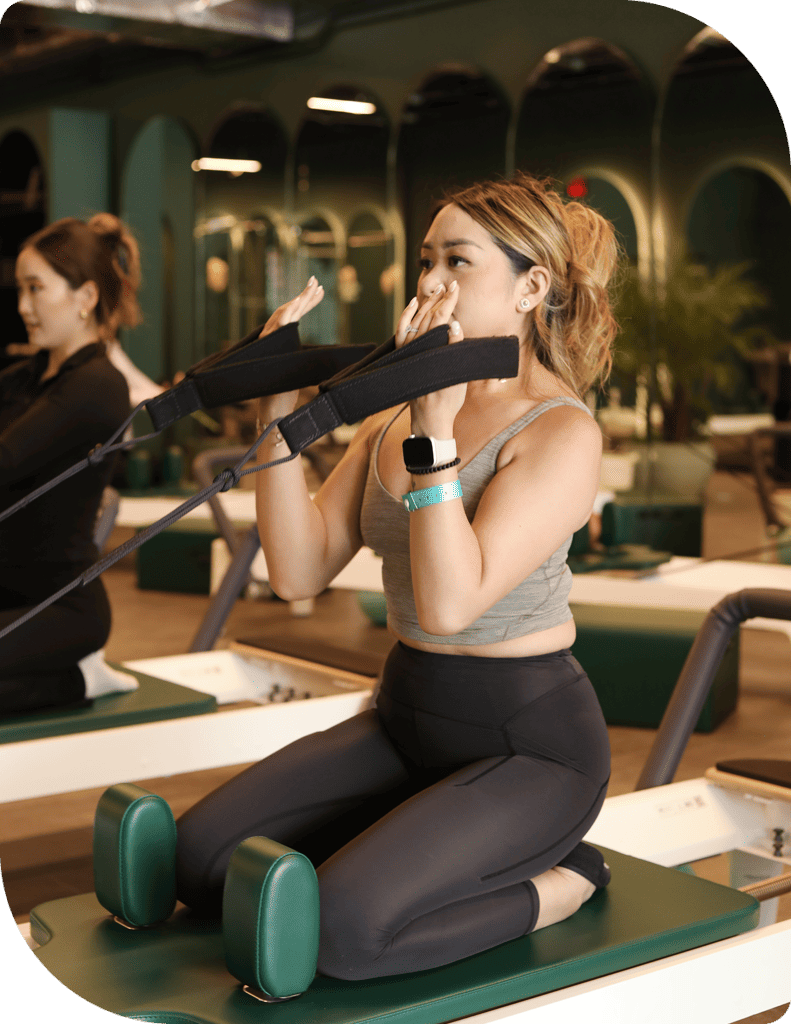
Learn how to correct the most common reformer mistakes in Pilates to improve your form, prevent injuries, and enhance your results. Whether you’re a beginner or seasoned practitioner, these expert tips will help you master proper reformer alignment and technique.
Understanding the Importance of Proper Reformer Technique
Reformer Pilates is a powerful and effective workout that strengthens, tones, and aligns the body. But like any fitness modality, doing it incorrectly can lead to wasted effort—or worse, injury. At Backstage Pilates in Miami, we emphasize mindful movement and correct form in every class. Proper reformer alignment not only maximizes your results, but also builds body awareness and prevents injury over time.
In this article, we’ll explore common reformer mistakes, how to fix them, and offer teaching corrections that Pilates instructors and students alike can use. Whether you’re new to Pilates or advancing into more complex movements, understanding these common reformer mistakes will help you get the most out of your sessions.
Why Good Form Matters in Reformer Pilates
Good form ensures that the right muscles are being activated and that your spine, joints, and muscles are properly supported. Reformer Pilates is low-impact, but it still requires precision. Misalignments or habitual form errors can lead to discomfort or strain over time. Practicing with correct alignment also amplifies the benefits of each move, from building core strength to improving posture and flexibility.
Signs You Might Be Making a Mistake
- Feeling strain in your neck, shoulders, or lower back during exercises
- Using momentum instead of controlled movement
- Difficulty maintaining balance or stability on the reformer
- Not feeling the targeted muscles engage
Let’s dive into the most frequent reformer technique errors and how to correct them using practical advice and easy-to-understand form cues.
Top Common Reformer Mistakes and How to Fix Them
1. Misaligned Pelvis Position
Error: One of the most common Pilates form corrections involves pelvic alignment. Many clients unknowingly tuck or arch their pelvis, throwing off spinal alignment and reducing engagement of the core and glutes.
Fix: Aim for a neutral pelvis. When lying on your back during footwork or bridging, you should feel your tailbone resting heavy into the carriage, with a small natural curve in your lower back. Imagine balancing a bowl of water on your pelvis—if it’s tilted, you’ll spill it.
Instructor Cue:
“Draw your hip bones and pubic bone into one flat triangle. Keep that triangle level.”
Correcting this foundational alignment is emphasized in our Pilates Classic Beginners class, where students learn body awareness before progressing to more advanced exercises.
2. Overusing the Upper Traps
Error: During arm work or shoulder exercises, clients often shrug their shoulders up toward their ears, engaging the upper trapezius instead of the lats or core.
Fix: Focus on keeping the shoulders down and wide. Engage the shoulder girdle and think of sliding your shoulder blades into your back pockets. This allows the proper muscles to activate and protects the neck.
Instructor Cue:
“Melt your shoulders away from your ears. Feel your shoulder blades move down and in.”
This correction is especially important in exercises like chest expansion, rowing, and long box pulling straps, which are often included in our Pilates Classic Intermediate sessions.
3. Locked Knees or Hyperextension
Error: Locking the knees in footwork or standing exercises on the reformer can create joint strain and reduce muscle activation in the thighs and glutes.
Fix: Keep a micro-bend in the knees, even when the legs are extended. This keeps the muscles engaged and protects the joints.
Instructor Cue:
“Soften the knees. Imagine energy lengthening out of your heels, not jamming into the joint.”
You’ll find this correction frequently addressed in our Reformer Pilates classes, which focus on dynamic strength and flexibility training with attention to form.
4. Using Momentum Instead of Control
Error: Moving too quickly or using momentum to complete a movement can make the exercise less effective and increase the risk of injury.
Fix: Pilates is built on control and precision. Slow down your movement and focus on muscle initiation and engagement. Let the springs guide your resistance but not overpower your control.
Instructor Cue:
“Move like you’re underwater—smooth, steady, and controlled.”
This principle is reinforced in our Pilates Power class, where strength and form are equally emphasized.
5. Not Engaging the Core Properly
Error: Failing to activate the deep abdominal muscles during reformer exercises shifts pressure to the spine and reduces stability.
Fix: Use your breath and visualize drawing your navel to your spine. Engage the transverse abdominis before initiating any movement. This engagement supports your spine and enhances control.
Instructor Cue:
“Exhale to connect your core—like you’re zipping up a tight pair of jeans.”
Core awareness is a central theme in all our classes, especially for those in our Prenatal & Postnatal program, where stability and safe movement are essential.
6. Incorrect Head and Neck Position
Error: Lifting the head too high or dropping it back can cause neck strain during abdominal work and exercises like the hundred or coordination.
Fix: Keep the head in line with the spine. When lifting the head and shoulders, support the neck by engaging the abdominal muscles. Think of lengthening through the crown of the head.
Instructor Cue:
“Imagine holding an orange under your chin—don’t squish it or drop it.”
Instructors at Backstage Pilates provide hands-on and verbal pilates teaching corrections to ensure comfort and proper form in every movement.
How to Prevent Common Pilates Errors Before They Start
1. Begin with the Basics
Whether you’re new or experienced, starting with the fundamentals ensures a strong foundation. Our Beginner’s Guide to Pilates highlights essential techniques and mindset shifts that help you develop safe and effective habits from day one.
Join our Classic Beginners class to learn the core principles of Pilates with expert guidance in a supportive and welcoming environment.
2. Use Mirrors and Instructor Feedback
Mirrors help you self-correct while instructor feedback ensures you’re truly aligning correctly. At Backstage Pilates, our certified instructors provide ongoing reformer form cues to help you stay on track throughout your practice.
Explore private Pilates sessions for personalized attention and advanced form correction tailored to your body and goals.
3. Understand the Equipment
Sometimes errors stem from unfamiliarity with the reformer itself. Learning how the springs, carriage, and footbar work can enhance both safety and effectiveness. Learn more in our Pilates Equipment Guide.
Our instructors will guide you through proper equipment setup and transitions to help prevent reformer technique errors before they occur.
4. Warm Up and Stretch
Jumping into reformer work without prepping your body can lead to stiffness and misalignment. Start with gentle stretching or a Pilates Stretch class to wake up your muscles and improve mobility before intensifying your workout.
Building Better Body Awareness Through Pilates
1. Develop Your Mind-Body Connection
Pilates is more than physical—it’s about mindful movement. Practicing awareness during every exercise sharpens proprioception (your body’s ability to sense its position) and helps you avoid common Pilates errors. At Backstage Pilates, we emphasize conscious breathing and focused movement that ties the mind and body together.
2. Listen to Your Body
If something feels off—stop. Pain or discomfort is a signal that your form may be incorrect. Communicate with your instructor and ask for modifications or cues. Our team at Backstage Pilates is trained to offer safe, effective options for every body type and fitness level.
3. Take Advantage of Progressive Programming
We encourage students to progress gradually. Jumping into advanced workouts without mastering the basics can lead to form breakdown. Our class offerings—from Classic Beginners to Cardio Jumpboard—are designed to build strength and stability in a logical, safe progression.
Ready to correct your technique and elevate your Pilates experience? Check our schedule and experience the difference of expert-led training in the heart of Miami.
Advanced Reformer Technique Corrections for Deeper Results
7. Incorrect Foot Placement on the Footbar
Error: Placing the feet too high or too low on the footbar can affect leg alignment, reduce muscle engagement, and strain the knees or hips. This is one of the most common reformer mistakes seen in both beginners and experienced students.
Fix: For footwork, your toes should be placed on the footbar with heels lifted, hips aligned, and knees tracking over the second and third toes. When doing heels or arches on the bar, ensure even pressure and alignment through both feet.
Instructor Cue:
“Line up your big toe, knee, and hip like train tracks. Press evenly through both feet.”
Proper foot placement is emphasized in our Pilates Classic Beginners and Intermediate classes, which build foundational lower-body alignment and strength.
8. Dropping the Ribs During Overhead Movements
Error: In exercises like short spine, long spine, or overhead presses, it’s easy to let the ribs flare open, disconnecting the core and overloading the lower back.
Fix: Keep the ribs knitted together by engaging your core and maintaining a neutral spine as much as possible. This protects your lumbar spine and deepens abdominal activation.
Instructor Cue:
“Zip your ribs in like a jacket. Keep your core hugging the midline.”
This correction is especially vital in our Pilates Power classes, where full-body strength and precision go hand-in-hand.
9. Knees Falling Inward or Outward
Error: During squats, footwork, or bridging, allowing the knees to collapse inward or bow outward can lead to poor lower-body mechanics and joint strain.
Fix: Align the knees with the hips and second toes. Use props like a small ball or ring to encourage proper placement, and actively engage the glutes and inner thighs to stabilize.
Instructor Cue:
“Imagine a magnet between your knees, pulling them gently toward center.”
This type of pilates form correction is often used in both Reformer Pilates and Cardio Jumpboard classes to maintain safe alignment during dynamic leg movements.
10. Overarching the Lower Back in Planks or Long Stretch Series
Error: Letting the hips sag or the lower back arch during planks, long stretch, or down stretch can place stress on the lumbar spine and reduce core engagement.
Fix: Maintain a strong line from your shoulders through your heels. Engage your glutes and abdominals to support the spine and keep the pelvis neutral.
Instructor Cue:
“Tuck your tail slightly. Think of knitting your ribs and hips toward each other.”
Our private Pilates sessions are ideal for working on these alignment details, especially if you’re recovering from injury or want to gain more confidence in your technique.
How Instructors Can Prevent and Correct Reformer Technique Errors
1. Use Clear, Consistent Cues
One of the most effective ways to prevent common Pilates errors is through clear, repeated verbal cues. Use simple language and visualization techniques to help clients better understand their body mechanics.
Examples include:
- “Imagine a string pulling you tall from the crown of your head.”
- “Feel your spine lengthen as you exhale and draw your belly in.”
- “Hug your inner thighs like there’s a credit card between them.”
Backstage Pilates instructors are trained in consistent cueing strategies that not only correct form but help clients internalize proper movement patterns.
2. Incorporate Hands-On Adjustments
When appropriate, tactile corrections can be extremely effective. Gently guiding a client’s shoulder down or helping them find neutral spine with your hands can make a lasting impression on their body awareness.
In our private training and corporate wellness programs, instructors use personalized guidance to prevent injury and refine technique in a professional and supportive environment.
3. Offer Modifications and Use Props
Sometimes technique errors arise because a movement is too advanced or the client lacks the mobility or strength to perform it correctly. Offering modifications and using props like cushions, straps, or boxes can help bridge the gap.
At Backstage Pilates, we believe in meeting clients where they are. Whether you’re working through an injury, pregnancy, or simply need a lighter option, our instructors are prepared with safe and effective alternatives.
4. Encourage Breath Awareness
Breath is a core principle of Pilates and can help correct many form issues. Coordinating breath with movement improves control, engages the deep core muscles, and reduces tension in the neck and shoulders.
Instructors should guide clients to inhale to prepare and exhale to engage. Breath cues such as “exhale to move, inhale to reset” help clients stay connected to their core and avoid using momentum.
Common Reformer Mistakes by Experience Level
Beginner Mistakes
- Relying on momentum rather than control
- Forgetting to engage the core throughout the workout
- Misunderstanding spring resistance (too heavy or too light)
- Poor posture or collapsed shoulders in seated or upright exercises
Our Pilates Classic Beginners class is specifically designed to help new students avoid these pitfalls. We introduce proper breathing techniques, essential alignment cues, and equipment handling from day one.
Intermediate Mistakes
- Pushing into advanced moves without mastering basics
- Letting alignment slip during faster-paced flows
- Neglecting transitions and setup for each exercise
For those ready to level up, our Classic Intermediate sessions refine control and build endurance while reinforcing core principles.
Advanced Mistakes
- Over-performing or relying on flexibility instead of strength
- Forgetting fundamental form in pursuit of complex moves
- Underestimating the value of precision and breath
Even seasoned practitioners benefit from revisiting the basics. Our instructors encourage mindful execution in every class—because true mastery comes from perfecting the details, not just completing the choreography.
How to Build Long-Term Pilates Technique and Confidence
1. Stay Consistent
Like anything worth mastering, Pilates requires consistency. Regular practice helps reinforce proper alignment, build strength, and enhance your awareness of pilates teaching corrections. At Backstage Pilates, we offer a wide variety of classes so you can stay committed without getting bored.
Explore our full range of group Pilates classes in Miami to build a sustainable routine that fits your lifestyle.
2. Track Your Progress
Keep a journal or video record of your sessions. Note the exercises that feel challenging, the cues that resonate with you, and any physical improvements you notice. This reflection helps you identify patterns and areas for growth.
3. Embrace the Journey
Perfect Pilates form doesn’t happen overnight. Be patient and curious with your body. Every adjustment, every cue, and every moment of awareness brings you closer to optimal movement and better results—both on and off the reformer.
4. Work with Skilled Instructors
Nothing replaces the value of expert eyes and hands-on guidance. Our certified instructors at Backstage Pilates are not only trained in classical and contemporary methods but also passionate about helping you thrive.
Whether you’re looking for a private session or want to join a dynamic group class, our Miami-based studio offers flexible scheduling and a warm, welcoming atmosphere for all levels.
Conclusion: Refine Your Practice, Transform Your Results
Correcting common reformer mistakes isn’t just about avoiding injury—it’s about unlocking the full potential of your Pilates practice. From pelvic alignment to breath control, each adjustment deepens your connection to your body and enhances every movement, rep, and result.
Whether you’re just starting out or refining your technique after years of practice, Backstage Pilates is here to support your journey. Our Miami studio blends expert instruction, supportive community, and progressive programming to help you look, feel, and move better every day.
Ready to take your Pilates experience to the next level? Check our class schedule, explore private Pilates sessions, or contact us to get started today.
Let’s move smarter, feel stronger, and live better—on and off the reformer.