Wondering, “Do men do Pilates?” Absolutely. This guide explains what a men Pilates class is really like, how Pilates supports strength and mobility, and why Miami men—from athletes to busy professionals—are adding it to their wellness routines.
Do Men Do Pilates? Yes—and They Have for Decades
Do men do Pilates? Yes. Men of all fitness levels take Pilates classes, from complete beginners and runners to golfers, strength athletes, surfers, and professional athletes. Pilates was created by a man, Joseph Pilates, and its original method was built around full-body strength, controlled movement, and rehabilitation.
Still, some people assume Pilates is only about light stretching or that it is designed for women. That idea disappears quickly after a first class. A good men Pilates class can challenge the core, legs, shoulders, back, balance, coordination, and endurance at the same time.
Pilates is not about lifting the heaviest weight in the room. It is about moving with control. Every exercise asks you to use the right muscles, keep steady alignment, and connect movement to your breath. Small adjustments can make a familiar exercise feel surprisingly difficult.
For active Miami residents, Pilates fits naturally into a balanced routine. South Florida offers year-round opportunities for golf, tennis, cycling, running, paddleboarding, beach workouts, and gym training. Pilates can help your body feel more prepared for those activities while giving overworked joints and muscles a smarter kind of challenge.
Is Pilates for Men Who Already Lift Weights?
Absolutely. In fact, Pilates for men is an excellent complement to weight training. Traditional strength workouts often focus on major muscle groups, such as the chest, arms, legs, and back. Pilates also trains those areas, but it gives special attention to stabilizing muscles that help the body move well.
That means you may notice weak links you did not know were there: hip stability, shoulder control, hamstring flexibility, ankle mobility, or deep abdominal strength. These details matter when you squat, deadlift, swing a golf club, throw a ball, or spend long hours at a desk.
Men do not need to choose between the gym and Pilates. Many get the best results by using both. Strength training builds load capacity. Pilates improves body awareness, movement quality, mobility, and core control.
What a Male Pilates Class Is Really Like
A male Pilates class is not about trying to look graceful or knowing every exercise before you arrive. It is a focused workout in a welcoming studio setting, with clear instruction and options for different fitness levels.
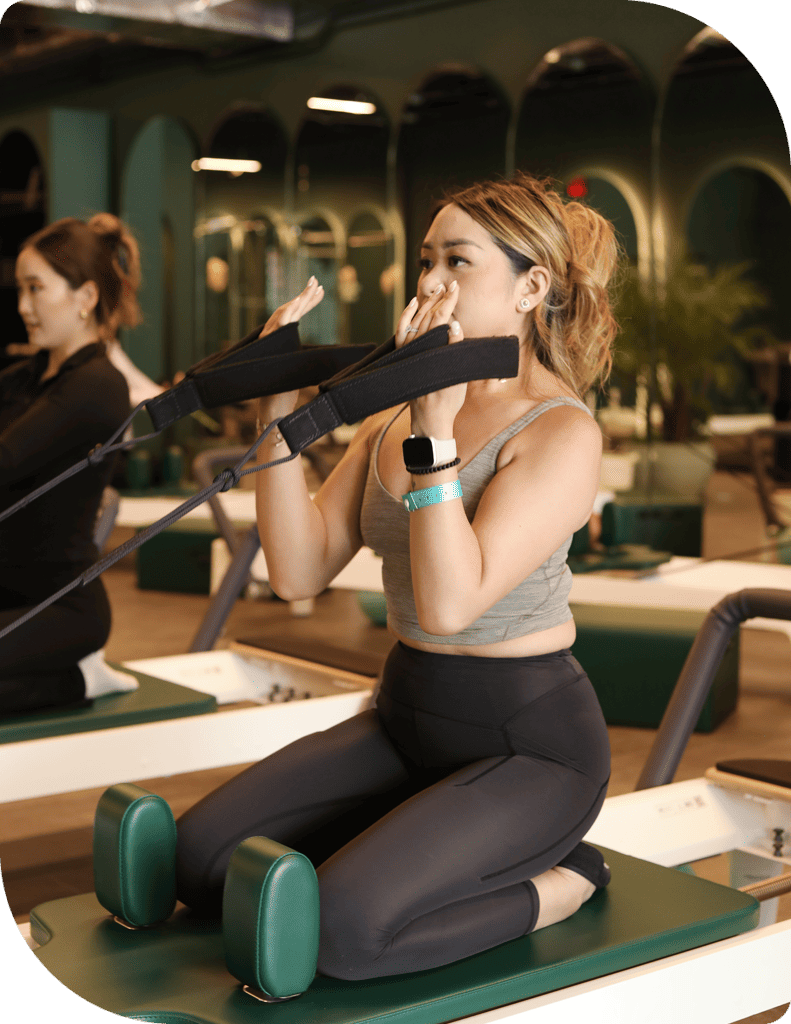
At Backstage Pilates, instructors guide clients through movements with attention to form. You may work on a mat, but many classes also use the Reformer: a specialized Pilates machine with a moving carriage, springs, straps, and a footbar. Springs create adjustable resistance, so an exercise can be made more supportive or more demanding.
What Happens During Your First Class?
Your first class usually begins with simple alignment and breathing cues. You may hear terms such as “neutral spine,” “engage your core,” “keep your ribs stacked,” or “lengthen through the crown of your head.” These are not meant to be confusing. They help you create better positions before you add movement.
Then, the workout builds. A typical class may include:
- Core exercises for the abdominals, obliques, and lower back
- Leg work for glutes, quads, hamstrings, and calves
- Upper-body pushing and pulling with straps or springs
- Mobility work for the hips, spine, and shoulders
- Balance and coordination drills that require concentration
- A final stretch to help you leave feeling longer and less tight
Expect to sweat. Expect to shake a little, too. Pilates often uses slow, precise repetitions and longer periods of muscle tension. You may not be jumping or sprinting, yet your muscles can work intensely.
If you are new, start with a Pilates beginners class to learn the foundational movements at a comfortable pace. You do not need to be flexible. You do not need prior dance experience. You simply need to be open to learning a different way to train.
What Should Men Wear to Pilates?
Wear comfortable workout clothes that allow you to bend, lunge, and raise your arms freely. Athletic shorts or fitted joggers with a T-shirt work well. Avoid very loose shorts, since some exercises involve lifting your legs or using equipment in positions where extra fabric gets in the way.
Most studios use grip socks for safety and stability. Bring water, arrive a few minutes early, and let your instructor know about old injuries, surgeries, or areas that feel tight.
Pilates Men Benefits: Strength, Mobility, and Better Movement
The biggest Pilates men benefits go beyond getting a stronger core. Consistent practice can improve the way you move in everyday life and during other workouts.
1. Stronger Core Without Endless Crunches
Pilates trains the deep abdominal muscles, pelvic floor, diaphragm, hips, and lower back as a connected system. This can help support posture and create a more stable base for lifting, running, and sports.
A strong core is not only about visible abs. It is about resisting unwanted movement and transferring force efficiently. When your trunk is stable, your arms and legs can move with more control.
2. Better Mobility for Tight Hips and Shoulders
Many men carry tension in the hips, hamstrings, chest, and shoulders. Sitting, driving, lifting, and screen time can all contribute. Pilates uses controlled ranges of motion to build flexibility alongside strength, rather than forcing a deep stretch before your body is ready.
This is especially useful for Miami professionals who split their time between desk work, commuting, and active weekends. Even one or two weekly sessions can become valuable recovery time for a body that feels stiff or compressed.
3. Improved Balance and Athletic Control
Pilates challenges coordination. You may stabilize your torso while moving one leg, press through the feet while controlling arm straps, or hold a balanced position while changing your breathing pattern. That kind of training supports agility and body awareness.
For runners, golfers, tennis players, and cyclists, those skills can be just as useful as adding another hard workout. Pilates helps you notice asymmetries, improve control from side to side, and move with greater intention.
4. Recovery That Still Feels Like Training
Recovery does not have to mean doing nothing. A well-designed Pilates workout can be challenging while remaining low impact. The springs on a Reformer provide resistance without the repeated pounding that comes from running or high-impact conditioning.
Explore Reformer Pilates classes if you want a workout that combines resistance, stability, and precise movement. It is a smart option for men looking to train consistently without putting unnecessary stress on their joints.
How Men Can Get Started With Pilates in Miami
The best approach is simple: choose an appropriate class, focus on form, and give yourself time to learn. Pilates has a learning curve because it asks for concentration. That is also what makes it effective.
Practical Tips for Your First Few Sessions
- Start at the right level. Beginner classes build confidence and teach essential technique.
- Listen to modifications. Adjusting a spring or range of motion is smart training, not a shortcut.
- Do not compete. Your goal is quality movement, not copying the person next to you.
- Be consistent. Aim for two sessions per week if your schedule allows.
- Pair Pilates with your current routine. Use it alongside lifting, sports, walking, or cardio.
If you want more individual guidance, private Pilates training can help you learn equipment, refine your technique, and create a plan around specific goals. It is also useful for men returning to exercise after an injury or a long break.
Whether you are focused on performance, posture, strength, or stress relief, Pilates meets you where you are. View the Backstage Pilates class schedule and find a session that works with your Miami lifestyle. Your first class may challenge your assumptions—and your muscles—in the best possible way.
Common Concerns Men Have Before Trying Pilates
Even after learning the answer to “do men do Pilates?” many guys still have a few questions before they book a class. That is normal. Trying a new workout can feel intimidating, especially when you are used to a gym, a sports team, or solo cardio.
“Will Pilates Be Hard Enough?”
Yes. Pilates can be scaled for nearly any fitness level, which means the challenge comes from the exercise setup, spring resistance, range of motion, and precision of your form.
A strong athlete may find that holding a controlled plank on the Reformer, moving slowly through single-leg work, or keeping the hips level during strap exercises demands more focus than expected. The goal is not to make every move look extreme. It is to make every repetition effective.
Many men are surprised by how much their core works. Unlike exercises that isolate one muscle at a time, Pilates often asks several areas to work together. Your glutes may stabilize your pelvis while your abdominals support your spine and your shoulders control resistance through the straps. It is detailed work. It adds up fast.
“Am I Too Inflexible for Pilates?”
No. Inflexibility is one of the best reasons to start.
Men who lift, cycle, run, play golf, or spend long days at a laptop often have tight hips, hamstrings, chest muscles, and shoulders. Pilates does not require you to arrive flexible. Instead, it helps you gradually build usable mobility while strengthening the muscles around each joint.
That distinction matters. Flexibility without control can leave a joint unsupported, while strength without mobility may make movement feel restricted. Pilates brings both qualities together in a practical way.
“Will I Be the Only Guy in Class?”
Probably not—and even if you are, it should not change your experience. A Pilates studio is a place for people who want to move better, feel stronger, and take care of their bodies. Everyone is working on their own form.
In a supportive men Pilates class, there is no need to prove how strong you are or push past good technique. The best workout is the one that helps you feel capable when you leave, not the one that leaves you unable to move the next day.
Pilates for Men and Sports Performance
For active men in Miami and South Florida, Pilates can support the activities they already enjoy. Whether you play tennis in the heat, train at the gym, hit the golf course, run along the beach, or spend weekends on the water, better movement control can make a real difference.
For Weight Lifters and Strength Athletes
Lifting programs often include big, powerful movements. Pilates can help improve the control behind them. Stronger deep core muscles, more mobile hips, and better shoulder positioning may help you feel more stable during squats, presses, rows, and deadlifts.
Pilates is not a replacement for progressive strength training if your goal is to increase maximum lifts. It is a smart complement. Think of it as movement training that supports the work you already do under heavy load.
For Runners, Cyclists, and Endurance Athletes
Repetitive motion can create imbalances over time. Runners may feel hip tightness or weak glute activation. Cyclists often deal with rounded shoulders, stiff hip flexors, and limited spinal movement. Pilates gives these patterns attention through controlled unilateral exercises, posture work, and mobility drills.
The result is not necessarily a faster mile after one class. Instead, consistent Pilates practice can help you become more aware of how your body moves, where you compensate, and when you need recovery.
For Golf, Tennis, and Pickleball Players
Rotational sports need more than a strong swing or serve. They require trunk stability, hip mobility, balance, shoulder control, and the ability to transfer force through the body. These are central ideas in Pilates.
A male Pilates routine can include controlled rotation and anti-rotation work, meaning you learn both how to move through the torso and how to resist unwanted twisting. That can be valuable for athletes who want to feel more connected, balanced, and efficient during play.
For Busy Professionals
Miami’s pace is fast. Work, traffic, travel, family, social plans, and year-round outdoor activities can make recovery an afterthought. Pilates offers a focused hour away from the screen and the constant rush.
You will breathe with intention, work through tight areas, and challenge your muscles without needing to make every session high impact. Air-conditioned studio classes are also a welcome option during South Florida’s hottest and most humid months.
How Often Should Men Do Pilates?
For most people, two Pilates sessions per week is an excellent starting point. That schedule gives you enough repetition to learn the method while leaving room for strength training, sports, cardio, and rest days.
One weekly session can still be beneficial, especially if you are new to exercise or have a busy schedule. Three sessions per week may work well for experienced clients, people focused on mobility, or those using Pilates as a major part of their training routine.
Create a Balanced Weekly Routine
A simple approach could look like this:
- Two Pilates sessions for core strength, mobility, and controlled resistance
- Two or three strength workouts or sport-specific training sessions
- Regular walking, swimming, cycling, or other enjoyable cardio
- At least one true recovery day based on your energy level and training load
Your routine does not need to be perfect. It needs to be sustainable. A consistent plan with manageable sessions will usually bring better results than an intense program you quit after two weeks.
Notice Progress Beyond the Mirror
The most meaningful Pilates men benefits are often felt before they are seen. You may notice that you stand taller, your lower back feels less stiff after sitting, or your shoulders feel more comfortable during pressing movements.
You may also see changes in balance, coordination, breathing, and recovery. A golf swing can feel smoother. A run may feel less jarring. Getting up from the floor, carrying groceries, or reaching overhead can become easier.
These changes are useful because Pilates is built for real life, not just the workout itself.
Make Pilates Part of Your Miami Wellness Routine
So, is Pilates for men? Without question. Pilates is for men who want stronger abs, healthier hips, better posture, more control in the gym, and a body that feels ready for the demands of everyday life.
You do not need to be an athlete, naturally flexible, or familiar with Pilates equipment to begin. You only need a willingness to slow down, learn the movements, and give your body a new kind of challenge.
At Backstage Pilates, men of every experience level can find welcoming instruction, thoughtful modifications, and workouts that meet them where they are. Whether your goal is sports performance, strength, mobility, or simply feeling better in your body, Pilates can become an important part of your routine. Book a class at Backstage Pilates and discover what focused, full-body training can do for you.
Frequently Asked Questions
Do men do Pilates, or is Pilates mainly for women?
Men of all fitness levels do Pilates, including lifters, runners, golfers, cyclists, surfers, and busy Miami professionals. Pilates was created by Joseph Pilates and was designed around full-body strength, controlled movement, and rehabilitation. At Backstage Pilates, men can expect a focused workout that challenges the core, legs, back, shoulders, balance, coordination, and endurance.
Is Pilates good for men who already lift weights?
Yes. Pilates is an excellent complement to weight training because it strengthens stabilizing muscles while improving mobility, body awareness, and control. It can help men identify weak links such as tight hips, limited shoulder movement, poor ankle mobility, or reduced core stability. Strength training builds load capacity, while Pilates supports better movement for squats, deadlifts, sports, and everyday activity.
What should I expect at my first men’s Pilates class in Miami?
Your first class at Backstage Pilates begins with simple cues for breathing, alignment, and core engagement. You may work on a mat or use a Reformer with springs, straps, a moving carriage, and a footbar. The class can include core work, leg exercises, upper-body resistance, mobility drills, balance training, and stretching. Expect precise movements, focused instruction, and a challenging low-impact workout.
Do I need to be flexible or have Pilates experience before I start?
No. You do not need to be flexible, have dance experience, or know Pilates exercises before your first session. A Pilates beginners class is a smart place to learn foundational movements at a comfortable pace. Instructors provide clear guidance and modifications, so you can adjust spring resistance or range of motion as needed. The goal is quality movement, not keeping up with anyone else.
How often should men do Pilates for strength, mobility, and recovery?
For a consistent routine, aim for two Pilates sessions per week if your schedule allows. This gives Miami men regular time to build core control, mobility, balance, and better movement patterns alongside lifting, running, golf, tennis, cycling, or other activities. Pilates can also serve as active recovery because it delivers resistance and muscle work without the repeated impact of harder cardio workouts.
What should men wear and bring to a Reformer Pilates class?
Wear comfortable workout clothing that lets you bend, lunge, and move your arms freely. Athletic shorts or fitted joggers with a T-shirt are good options; avoid very loose shorts that can get in the way during equipment exercises. Most studios use grip socks for safety and stability. Bring water, arrive a few minutes early, and tell your Backstage Pilates instructor about injuries, surgeries, or tight areas.