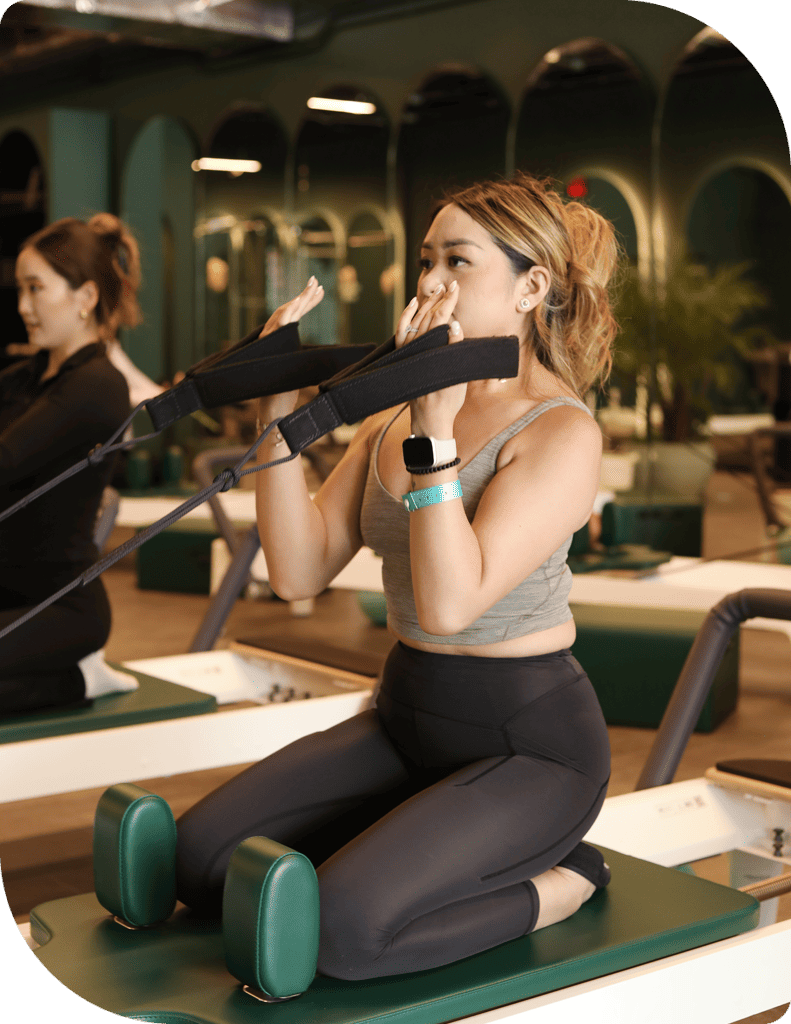
Neutral pelvis is the foundation of strong, safe Pilates movement. Learn how to find it, why it supports better posture and core control, and how to use this essential alignment in every workout—from your first mat class to advanced Reformer training.
In Pilates, the smallest adjustments can make the biggest difference. One of the most important is finding your neutral pelvis. This position helps your spine, hips, and deep core work together instead of competing with one another.
Whether you are new to Pilates in Miami or have been training for years, neutral pelvis Pilates skills can improve how every exercise feels. You may notice less strain in your lower back, better control during leg movements, and a stronger connection to your core. It is not about forcing your body into a perfect shape. It is about finding a balanced position that supports your body.
What Is Neutral Pelvis in Pilates?
Neutral pelvis is the natural position of your pelvis when the front hip bones and pubic bone are generally level with each other. In this position, the lower back keeps its natural, gentle curve. It is neither flattened hard into the mat nor overly arched.
Think of your pelvis as a bowl of water. When you are lying on your back, neutral pelvis means the bowl is level enough that water would not spill toward your ribs or toward your feet. This simple image is one of the most useful Pilates posture basics cues.
Neutral does not mean rigid. Your body should still breathe, move, and adapt. The goal is stable alignment with enough freedom to perform an exercise well.
Neutral Spine Pilates: The Connection Between Your Pelvis and Back
Your pelvis and spine are closely connected. When the pelvis tips too far forward, your lower back may arch and your ribs may pop up. When it tips too far backward, the natural curve of the lower spine can flatten, making it harder to move freely through the hips.
A neutral spine Pilates position allows the curves of your spine to remain natural. This creates a more efficient base for the deep abdominal muscles, pelvic floor, diaphragm, and back muscles.
That is why instructors often talk about alignment before adding springs, weights, or faster transitions. Strong movement begins with smart placement.
Neutral Pelvis Is Not the Same for Everyone
Body proportions, flexibility, pregnancy, injuries, and daily habits can all affect pelvic placement. Someone with tight hip flexors may naturally feel more arch in the lower back. Another person may feel more comfortable with a flatter back because of posture patterns or limited mobility.
The best neutral pelvis Pilates position is one where you can breathe deeply, relax unnecessary tension, and engage your core without gripping your glutes or clenching your jaw. If you have ongoing pain, working with an instructor in a private Pilates training session can provide personalized guidance and modifications.
How to Find Neutral Pelvis Step by Step
You can practice pelvic placement Pilates skills almost anywhere: on a mat, on a Reformer, or even while waiting for coffee after a walk along Miami Beach. Start slowly. Precision matters more than intensity.
Begin on Your Back
Lie on your back with your knees bent, feet flat on the floor, and arms relaxed by your sides. Place your feet about hip-width apart. Let your head rest comfortably, and allow your shoulders to soften away from your ears.
Before you adjust anything, notice your starting point. Is your lower back pressing firmly into the mat? Is there a large gap underneath it? Neither is wrong; you are simply gathering information.
Try a Small Pelvic Tilt
Gently exhale and tip your pelvis toward your ribs, as if you are trying to lightly flatten your lower back into the mat. This is often called an imprint or posterior tilt. Do not squeeze your glutes hard.
Then inhale and tip your pelvis slightly in the other direction, allowing your tailbone to lengthen toward the mat and your lower back to arch a little more. Your ribs should stay connected and calm rather than flaring open.
Move between these two positions two or three times. Keep the motion small. You are not doing a big bridge or lifting your hips.
Settle in the Middle
Now pause between the two extremes. Feel the weight of your sacrum, the triangular bone at the base of your spine, resting on the mat. You should have a small space beneath your lower back, but not enough space to slide your entire hand through easily.
This is usually your neutral pelvis.
Place your fingertips on the front points of your hip bones, then imagine a line connecting them to your pubic bone. In a neutral position, this area should feel relatively level. Again, do not chase perfection. Find a calm, supported middle.
Use Your Breath to Confirm Your Pilates Form
Breathing is an honest test of good Pilates form. Inhale into the sides and back of your rib cage. Exhale slowly, feeling your lower belly gently draw inward as though you are tightening a wide belt around your waist.
If you lose your pelvic position every time you exhale, you may be pulling your abs in too forcefully. If your back arches more during the inhale, your ribs may be lifting. Reduce the effort. A smaller, steadier engagement is more useful than a dramatic one.
Beginner-friendly instruction can help you build this awareness from day one. Explore Pilates classes for beginners to practice fundamental breathing, core connection, and alignment in a supportive setting.
Why Every Pilates Exercise Depends on Pelvic Placement
Neutral pelvis affects how force travels through your body. When your pelvis is balanced, your hips can move more freely and your core can stabilize without taking over. This improves control in both simple and challenging exercises.
It Helps Your Core Work More Effectively
Many people think core work means flattening the stomach as hard as possible. Pilates takes a more complete approach. Your core includes deep muscles around the abdomen, back, pelvis, and breathing system.
In neutral spine Pilates, these muscles can coordinate to support you. This matters during toe taps, leg circles, planks, bridges, and Reformer footwork. Instead of relying on your neck, hip flexors, or lower back, you create support from the center outward.
It Protects Your Lower Back and Hips
Poor alignment does not automatically cause pain, but repeated movement in an uncomfortable position can add stress to sensitive areas. If your pelvis rocks side to side during leg work, for example, your lower back may try to create motion that should be coming from the hip joint.
Learning pelvic placement Pilates techniques can help you recognize that pattern sooner. You may need to lower your legs, reduce your range of motion, or use lighter springs. Those choices are not setbacks. They are signs of intelligent training.
It Improves Everyday Posture
Miami’s active lifestyle often includes long drives, desk work, travel, pickleball, running, and outdoor workouts. These routines can leave the hip flexors tight and the lower back tired. Practicing Pilates alignment teaches you to notice when you are hanging in your lower back or tucking under too much.
Over time, that awareness can carry into standing, walking, and sitting. You may stand taller without forcing your shoulders back. You may also feel more stable when lifting groceries, carrying a beach bag, or moving through a busy day.
For more ways to build strength with precise support, try Reformer Pilates classes at Backstage Pilates. The resistance and feedback from the equipment can make alignment easier to feel.
Common Neutral Pelvis Mistakes and Simple Fixes
Over-Tucking the Pelvis
Some students press their low back down because they believe “flat equals safe.” While imprinting can be appropriate for certain exercises, holding a strong tuck throughout every movement may limit hip mobility and create tension in the glutes.
Fix: Soften your tailbone and return to the middle. Keep a gentle natural curve in your lower back unless your instructor gives you a different cue for a specific exercise.
Overarching the Lower Back
This often happens when the legs move away from the body or when resistance becomes too challenging. You may feel your ribs flare and your hip flexors grip.
Fix: Make the exercise smaller. Bend your knees, lower the springs, or bring your legs closer in. Maintain quality before increasing difficulty.
Holding Tension Everywhere
Neutral pelvis does not require a clenched body. If your shoulders rise, your feet grip, and your breath becomes shallow, the work has become too intense.
Fix: Exhale slowly, relax your jaw, and use about 30 to 40 percent effort. Consistent practice creates better results than forcing a position.
Ready to refine your Pilates form with experienced guidance? View the Backstage Pilates class schedule and find a Miami class that fits your routine.
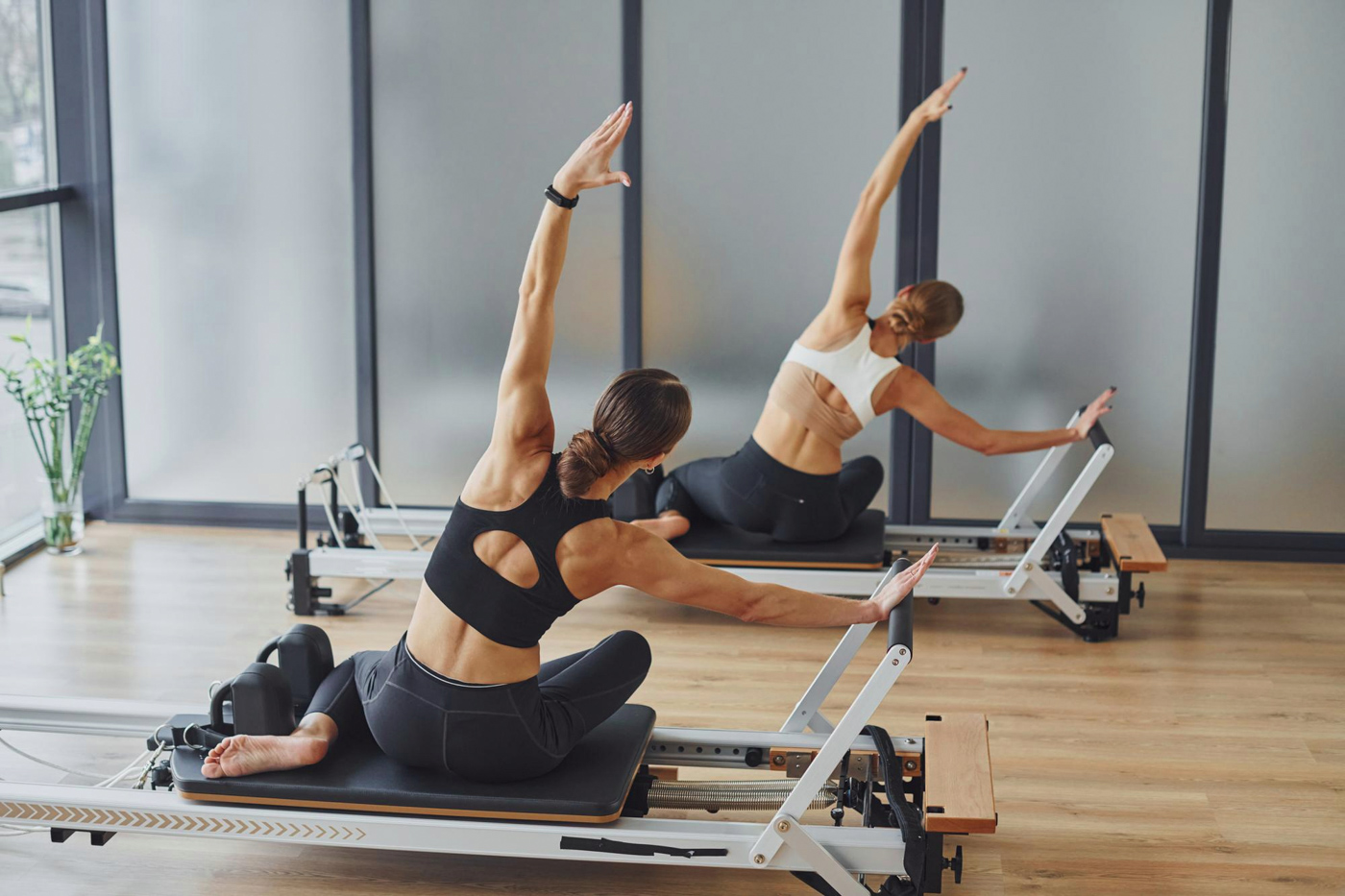
How to Keep a Neutral Pelvis During Common Pilates Exercises
Finding neutral pelvis while lying still is the first step. Keeping it while your arms, legs, and springs begin to move is where Pilates alignment becomes truly valuable.
You do not need to freeze your pelvis completely. A healthy body needs movement. The goal is to avoid unnecessary rocking, gripping, or shifting that takes the exercise out of the intended muscles and into your lower back.
During Mat Work and Abdominal Exercises
In exercises such as toe taps, tabletop holds, single-leg stretches, and leg circles, your pelvis should feel steady and supported. Your thigh bone moves inside the hip socket while your torso stays organized.
Start with your knees bent at 90 degrees and your shins parallel to the floor. Exhale as you slowly lower one toe toward the mat. If your lower back arches, ribs flare, or pelvis tips forward, bring the leg back up sooner. That is your current range of control.
Small movement is still real work.
As your neutral pelvis Pilates strength improves, you can gradually lengthen the lever by reaching the leg farther away. There is no prize for lowering your legs closer to the floor if your Pilates form disappears in the process.
A Helpful Cue: Move From the Hip, Not the Back
Imagine your pelvis is a quiet bowl resting on the mat. Your leg moves from the hip joint, but the bowl does not spill. This cue can reduce the tendency to grip your hip flexors or use your lower back for momentum.
If you feel strain in your neck, place your head down, bend your knees more, or take a brief rest. Good Pilates posture basics always include choosing a version of the movement you can control with steady breathing.
During Bridges and Hip Lifts
Bridging is a great example of how pelvic placement Pilates can change based on the goal of an exercise. You may begin in neutral pelvis, then gently articulate your spine as you lift into a bridge. This means your pelvis will move—and that is completely appropriate.
The key is to move with control instead of thrusting upward from the lower back.
Start with feet grounded and parallel. Inhale in neutral. Exhale, lightly engage the back of your legs and glutes, then let your tailbone curl slightly as you peel your spine off the mat. At the top, your ribs should remain soft rather than pushing toward the ceiling.
Lower down slowly, from the upper back through the middle back and finally the pelvis. Avoid dropping quickly. The return is part of the exercise.
During Reformer Footwork and Leg Work
Reformer training gives you immediate feedback because the carriage moves underneath you. If your pelvis shifts, your feet press unevenly, or your ribs pop up, you may feel the carriage become less smooth.
During footwork, begin with your sacrum heavy against the carriage and your spine in a comfortable neutral position. Press the carriage out by extending from your hips, knees, and ankles. Then return with control. Do not lock your knees or tuck your pelvis aggressively at the bottom.
During straps, keep an eye on the distance between your ribs and pelvis. If your legs lower and your back begins to arch, make the range smaller or bend your knees. This adjustment helps maintain neutral spine Pilates alignment while allowing your core to do its job.
Miami residents often enjoy challenging, high-energy workouts, but better control always beats more resistance. Precision makes strength more useful.
When Neutral Pelvis Should Change
Neutral pelvis is a home base, not a rule that applies identically to every exercise. Pilates is a movement method, and different exercises require different spinal positions.
For example, a roll-up, pelvic curl, or short spine exercise uses intentional spinal flexion. Swan and certain extension movements require controlled lengthening through the front of the hips and spine. In side-lying work, your pelvis must adapt to gravity while still avoiding collapse or twisting.
Neutral Is the Starting Point, Not a Rigid Pose
A common mistake is trying to hold neutral pelvis during an exercise designed for spinal movement. This can make your body stiff and limit the purpose of the exercise.
Instead, learn to recognize the difference between intentional movement and uncontrolled movement. If an instructor cues you to curl your tailbone, you are moving your pelvis on purpose. If your pelvis shifts because the springs are too heavy or your legs are too low, that is compensation.
This awareness is a major part of advanced Pilates form.
Pregnancy, Postpartum Recovery, and Individual Needs
Pelvic placement can also change during pregnancy, postpartum recovery, or periods of lower-back sensitivity. As the body changes, a previously comfortable neutral position may need support from props, a wedge, lighter resistance, or different exercise choices.
There is no need to force a textbook position. The best alignment is the one that allows you to breathe, move, and feel supported without pain.
If you are returning to exercise after pregnancy, recovering from an injury, or managing recurring discomfort, tell your instructor before class. Personalized cues can make a significant difference, especially in a climate like South Florida where year-round activity can make it tempting to train through fatigue.
Build Better Pilates Alignment Beyond the Studio
Neutral pelvis Pilates practice does not end when class does. The more often you notice your alignment during daily life, the easier it becomes to find a balanced position during movement.
Check Your Standing Posture
When standing in line, waiting for a friend in Wynwood, or preparing dinner at home, notice where your weight is resting. Are you leaning into one hip? Are your ribs lifting forward while your pelvis tips back? Or are you tucking under and squeezing your glutes all day?
Try placing your feet evenly beneath your hips. Soften your knees. Let your tailbone point naturally toward the floor, and stack your rib cage comfortably over your pelvis. Take one full breath.
That is often enough to reset.
Support Your Alignment When Sitting
Long drives, workdays, and time spent scrolling can encourage a rounded or slumped position. Sit back on your sitting bones instead of collapsing onto your tailbone. Keep both feet supported when possible, and avoid crossing your legs for hours at a time.
You do not need “perfect posture” every minute. Bodies benefit from changing positions. Still, regular alignment check-ins can reduce the habit of hanging in your lower back or holding tension through your hips.
Practice a Two-Minute Daily Reset
Try this simple routine before a workout, after a beach walk, or at the end of your day:
Lie on your back with knees bent and feet grounded. Slowly tilt your pelvis forward and back two or three times. Pause in the middle. Breathe into your side ribs for three slow breaths. On each exhale, gently engage your deep abdominal muscles without flattening your back or clenching your glutes.
Two minutes can sharpen body awareness. Over time, it can also help your Pilates alignment feel more natural in every class.
Make Neutral Pelvis a Lasting Pilates Habit
Neutral pelvis is not about holding one perfect shape. It is about learning where your body is in space, creating a stable foundation, and knowing when to move from that foundation with control.
When you understand neutral spine Pilates principles, every exercise becomes more intentional. Your core can work with your breath. Your hips can move with greater freedom. Your lower back does not have to do all the work.
Start small, stay patient, and let quality lead. Whether you are trying your first mat class or refining advanced Reformer work, thoughtful pelvic placement supports stronger, safer movement.
Ready to feel the difference that expert coaching can make? Book a class at Backstage Pilates and build better Pilates form, confidence, and whole-body strength in a welcoming Miami wellness community.