Neck and shoulder tension can make work, workouts, and everyday life feel harder. Learn how Pilates can improve posture, mobility, core support, and body awareness, with simple neck relief exercises and practical tips for Miami residents who want to move with less stiffness.
Why Neck and Shoulder Tension Is So Common
Neck tightness is everywhere. Long workdays, phone scrolling, driving through Miami traffic, strength training, and even stress can all leave your upper body feeling heavy and restricted.
Many people hold tension in the upper trapezius muscles, which run from the neck to the tops of the shoulders. When these muscles work overtime, the shoulders creep toward the ears, the head moves forward, and normal movement starts to feel uncomfortable. This pattern can lead to headaches, limited range of motion, and ongoing upper body tension.
Miami’s active lifestyle can add to the problem. A morning workout, hours at a laptop, and an evening out may sound balanced, but the body still needs intentional recovery. Pilates for stiffness offers a smart way to restore that balance because it does more than stretch tight areas. It teaches the whole body to move with better alignment.
Can Pilates Help Neck Pain?
Yes, neck pain Pilates sessions can be helpful for many people because Pilates builds strength in the muscles that support healthy posture. Instead of forcing the neck to relax, Pilates improves the work of the core, shoulder blades, upper back, and deep neck muscles.
When the core is weak or the upper back is rounded, the neck often tries to do too much. Pilates helps create a stronger foundation, so the shoulders and neck do not have to compensate during daily movement.
Gentle, well-taught Pilates can also improve body awareness. You begin to notice when you are gripping your shoulders, jutting your chin forward, or holding your breath. Small corrections matter. Over time, they can reduce recurring tension.
What Causes Tight Shoulders During Exercise?
Shoulders can tighten during exercise when the body lacks stability, mobility, or proper form. Common causes include:
- Overusing the neck during abdominal work
- Holding the breath during challenging movements
- Weak muscles around the shoulder blades
- Limited upper-back mobility
- Using resistance that is too heavy
- Stress and poor desk posture
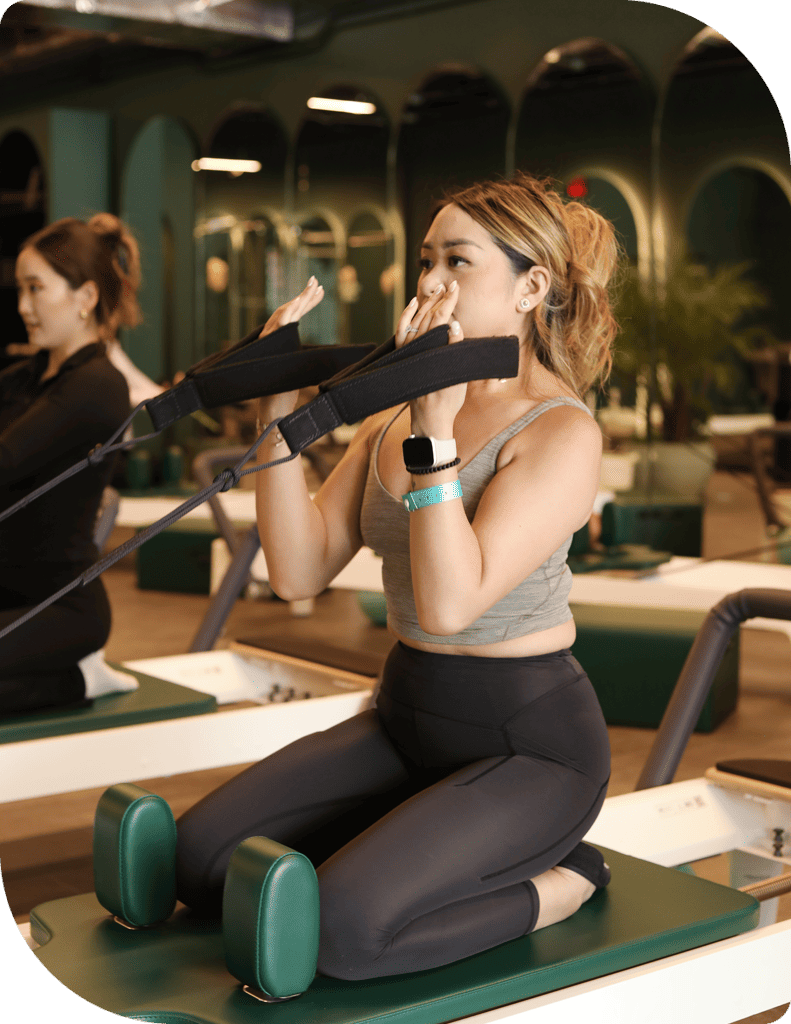
A quality Reformer Pilates class can be especially useful because the equipment provides support and feedback. Springs add resistance, but they can also help you learn controlled movement without relying on neck or shoulder muscles.
How Pilates Supports Neck and Shoulder Relief
Shoulder tension Pilates work is not about aggressively pulling on tight muscles. It is about reconnecting the body from the center outward. A skilled instructor will encourage you to keep your ribs stacked over your pelvis, lengthen through the crown of the head, and let the shoulder blades glide naturally on the back.
Better Posture Starts With the Core
Your core is more than your abs. In Pilates, it includes the deep muscles of the abdomen, back, pelvic floor, and diaphragm. These muscles help stabilize your spine while your arms and legs move.
When your center is active, the neck can stay longer and more relaxed. This is why Pilates may feel different from a typical upper-body workout. Rather than isolating one sore spot, it addresses the movement habits that may have created the problem.
For people who are new to mindful movement, beginner Pilates classes provide a supportive place to learn the basics. You do not need to be flexible, strong, or pain-free to start. You simply need a willingness to move slowly and pay attention.
Shoulder Blade Strength Changes Everything
The shoulder blades are designed to move. They should slide up, down, around, and gently toward the spine as the arms lift and lower. If they become stiff or unstable, the neck often takes over.
Pilates strengthens muscles such as the serratus anterior, mid-back muscles, and lower trapezius. These muscles support smoother shoulder movement while helping reduce unnecessary gripping near the ears. That is a major benefit for people dealing with frequent upper body tension.
Focus on Length, Not Force
During Pilates neck exercises, think about making space between your ears and shoulders. Avoid yanking your head forward or pressing your shoulders down with force. The goal is gentle length and steady control.
If a movement causes sharp pain, tingling, numbness, dizziness, or pain that travels down the arm, stop and speak with a medical professional. Pilates supports wellness, but it is not a substitute for diagnosis or medical care.
Simple Pilates Neck Exercises to Try Carefully
These neck relief exercises are gentle enough for many people, especially after a long day at a desk. Move slowly, stay within a comfortable range, and never push into pain.
1. Pilates Breathing With Shoulder Release
Lie on your back with your knees bent and feet on the floor. Place your arms by your sides. Inhale through the nose and expand the rib cage in all directions. As you exhale, imagine your shoulders becoming heavier and wider across the mat.
Take five to eight slow breaths. This simple exercise helps reduce stress-driven tension and introduces the diaphragmatic breathing used in Pilates.
2. Chin Nod for Deep Neck Support
Stay on your back. Keep the back of your head long on the mat, then make a very small nod as if you are saying “yes” slowly. Do not flatten your neck or force your chin toward your chest.
Hold for one breath, then release. Repeat six to10 times. This movement activates deep neck support muscles and can be a useful part of a neck pain Pilates routine.
3. Arm Reach With Stable Ribs
Lie on your back with your arms reaching toward the ceiling, palms facing each other. Inhale. On the exhale, reach one arm a little higher without lifting the shoulder toward the ear. Return and switch sides.
The movement is small. That is the point. You are practicing shoulder-blade control while keeping the neck relaxed. Try eight repetitions per side.
4. Seated Upper-Back Extension
Sit tall in a chair with both feet grounded. Place your hands behind your head lightly, keeping your elbows wide. Inhale to lengthen your spine. Exhale and gently lift your chest upward without crunching the lower back or squeezing your neck.
This exercise can counter the rounded posture that often comes from computers and phones. It also feels great after a humid South Florida day spent driving or working indoors.
Make Pilates Part of Your Tension-Relief Routine
Consistency is more valuable than intensity. Two or three Pilates sessions each week, paired with regular walking, hydration, and brief posture breaks, can make a noticeable difference in how your neck and shoulders feel.
Between classes, set a reminder to stand up every hour. Roll the shoulders, take three deep breaths, and look away from your screen. These small resets can prevent tightness from building all day.
For more personalized support, private Pilates training gives you one-on-one guidance tailored to your posture, goals, movement history, and comfort level. An instructor can modify exercises, refine technique, and help you build confidence safely.
At Backstage Pilates, Miami clients can explore Pilates for stiffness in an encouraging environment designed for every fitness level. Whether you want relief from desk-related tightness, better workout recovery, or stronger posture for your busy lifestyle, intentional movement can help your body feel lighter, steadier, and more at ease.
Ready to move with less tension? Explore the Pilates Stretch class and give your neck, shoulders, and entire body the focused care they deserve.
How to Use Pilates for Neck and Shoulder Tension Safely
For lasting relief, Pilates should feel precise rather than punishing. The best neck pain Pilates approach uses controlled movement, steady breathing, and resistance that matches your current ability.
That matters for beginners and experienced exercisers alike. If you spend most of the day at a desk in Brickell, drive across Miami for work, or train hard in the gym, your body may be used to moving fast and pushing through discomfort. Pilates asks you to slow down. This is where progress often begins.
Start With Alignment Before Adding Intensity
Before lifting your arms, using springs, or holding a plank, check your starting position. Keep your head balanced over your ribs instead of reaching it forward. Let your jaw relax. Allow the collarbones to feel wide, and imagine the back of your neck becoming longer.
These small adjustments reduce unnecessary upper body tension. They also make it easier for the muscles around the shoulder blades to do their job.
In Pilates, more effort is not always better. If your shoulders rise toward your ears, reduce the range of motion or resistance. If you cannot breathe smoothly, pause and reset. Good form creates better results than forcing a difficult exercise.
Use Your Breath to Release Neck Tightness
Breathing is a powerful tool for shoulder tension Pilates work. Stress can make people breathe high in the chest, which may recruit the neck and upper trapezius muscles more than necessary. Over time, this can contribute to stiffness and fatigue.
Try inhaling through your nose and expanding the sides and back of your rib cage. Then exhale slowly as you gently engage your deep abdominal muscles. Your shoulders should remain soft during both parts of the breath.
This style of breathing can be especially helpful after a busy Miami day. A few slow breaths in an air-conditioned studio, at home, or even in your parked car can create a meaningful reset before tension builds.
A Simple Form Cue to Remember
Use this cue: “Shoulders relaxed, ribs supported, neck long.” Repeat it before challenging exercises, especially arm work, abdominal curls, planks, and side-lying movements.
It is simple, but it works.
Best Pilates Movements for Upper Body Tension
Pilates for stiffness combines mobility with strength. Stretching alone may feel good for a few minutes, but lasting change often requires stronger support from the core, upper back, and shoulder stabilizers.
Chest Opening With Arm Reaches
Tight chest muscles can pull the shoulders forward, making the neck work harder. A gentle chest-opening exercise can help restore balance.
Lie on your back with knees bent. Reach both arms toward the ceiling, palms facing one another. Slowly open your arms out to the sides only as far as you can without arching your back or lifting your ribs. Exhale to return the arms overhead.
Move with control for six to eight repetitions. Keep the shoulders heavy and avoid forcing them down. This is one of the most accessible Pilates neck exercises because it encourages chest mobility without straining the cervical spine.
Swimming Prep for Upper-Back Strength
Upper-back weakness often contributes to shoulder tension. Swimming prep helps wake up the muscles that support the shoulder blades while teaching the neck to stay in line with the spine.
Lie on your stomach with your forehead resting lightly on your hands or a small towel. Gently draw your shoulder blades toward your back pockets. Lift your chest only a few inches, keeping your gaze down so you do not crank the neck.
Hold for one slow breath, then lower. Repeat five to six times. The lift should be small. Think length, not height.
For additional guided practice, an intermediate Pilates class can help experienced movers build upper-back strength with more challenging variations and instructor feedback.
Mermaid Side Bend for Rib and Shoulder Mobility
Side bending is often overlooked, yet it can feel wonderful when one side of the neck and shoulder is always tight. Sit comfortably with one hand resting on the floor or a stable support. Reach the opposite arm overhead and lean gently to the side.
Keep both sitting bones grounded as much as possible. Take two or three full breaths into the side ribs, then switch sides.
This movement can improve mobility through the ribs, lats, and side body. When these areas move more freely, the shoulders may not need to grip as much during reaching, lifting, and workouts.
Daily Habits That Support Neck Relief Exercises
A Pilates session can make you feel more open, but daily choices determine whether that feeling lasts. Neck relief exercises work best when they are part of a broader routine that supports posture, recovery, and stress management.
Create a Better Desk Setup
Your screen should be close to eye level, not down near your lap. Keep your keyboard near enough that you do not reach forward with rounded shoulders. Support your lower back, place both feet on the floor, and avoid holding your phone between your ear and shoulder.
Then take short movement breaks. Every 30 to 60 minutes, stand up, walk for a minute, circle your arms, and do a few gentle chin nods. You do not need a long workout break. You need frequent reminders that your body was made to move.
Balance Intense Training With Mobility
Miami’s fitness culture is energetic, from beach runs and cycling to strength training and racquet sports. Those activities can be excellent for health, but repetitive movement without recovery may lead to upper body tension.
Pair higher-intensity workouts with Pilates sessions that emphasize mobility, stability, and alignment. A Pilates Stretch class can be an ideal complement to demanding training because it encourages mindful movement through the entire body, not just the sore area.
Hydration also matters in South Florida’s heat. Muscles do not become tight simply because you need water, but dehydration can make recovery feel harder. Drink water consistently, particularly after outdoor activity, and give your body time to cool down before stretching deeply.
Know When to Seek Medical Guidance
Pilates can support many people with mild muscle tension, postural discomfort, and general stiffness. However, persistent pain deserves attention.
See a qualified healthcare professional if neck symptoms are severe, started after an injury, cause weakness, include numbness or tingling, or travel into the arm or hand. You should also seek guidance for recurring headaches, dizziness, unexplained pain, or symptoms that do not improve with rest and gentle movement.
Once you have appropriate clearance, Pilates can be a valuable part of a personalized wellness plan.
Build a Stronger, More Relaxed Body With Backstage Pilates
Neck and shoulder tension often improves when you stop treating the neck as an isolated problem. Core stability, upper-back strength, shoulder-blade control, breathing, and daily posture all work together.
That is the value of Pilates. It helps you move with awareness, not just effort. Whether you are brand-new to exercise, returning after time away, or looking to improve athletic performance, consistent practice can help you feel more balanced and less restricted.
Backstage Pilates offers a welcoming Miami environment where every fitness level can learn to move with better control and confidence. Explore the Pilates class options to find a format that supports your goals, or book a private Pilates session for individualized guidance on posture, mobility, and neck-friendly movement.
Your shoulders do not have to carry the day. Make time for intentional movement, breathe deeply, and let Pilates help you build strength that feels good from the inside out.
Frequently Asked Questions
Can Pilates help relieve neck and shoulder tension?
Yes. Pilates can help many people reduce neck and shoulder tension by improving posture, core support, upper-back strength, and body awareness. Rather than only stretching a sore area, Pilates teaches your shoulder blades, ribs, and spine to work together with less strain. At Backstage Pilates, instructors guide clients to avoid gripping the shoulders and move with controlled, comfortable alignment.
Why do my neck and shoulders get tight during workouts or Pilates?
Neck and shoulder tightness during exercise often happens when the neck tries to compensate for weak core support, limited upper-back mobility, or unstable shoulder blades. Holding your breath, using resistance that is too heavy, or pulling on the neck during abdominal work can also contribute. A well-taught Pilates class helps you slow down, refine your form, and build support from the center outward.
Is Reformer Pilates good for tight shoulders and desk-related neck pain?
Reformer Pilates can be especially helpful for desk-related stiffness because the equipment provides support and feedback as you move. The springs offer adjustable resistance while helping you practice controlled arm, shoulder, and core work without relying on your neck. For Miami residents balancing laptop hours, traffic, workouts, and an active social schedule, Reformer classes can support better movement and recovery.
Do I need Pilates experience or flexibility to start classes for neck stiffness?
No. You do not need prior Pilates experience, advanced flexibility, or a high fitness level to begin. Beginner Pilates classes offer a supportive way to learn breathing, posture, core connection, and shoulder-blade control at a comfortable pace. The goal is not to force a stretch or push through discomfort. It is to build awareness and strength with steady, intentional movement.
How often should I do Pilates for neck and shoulder tension relief?
Consistency matters more than intensity. The article recommends two or three Pilates sessions per week, along with walking, hydration, and brief posture breaks throughout the day. Between sessions, stand up at least once an hour, roll your shoulders, take a few deep breaths, and look away from your screen. These simple habits can help prevent tension from building during busy Miami workdays.
Should I choose private Pilates sessions for neck and shoulder pain?
Private Pilates training is a strong option if you want personalized guidance for your posture, movement history, goals, and comfort level. A Backstage Pilates instructor can modify exercises, refine your technique, and help you build confidence without overworking your neck or shoulders. Stop exercising and consult a medical professional if you have sharp pain, numbness, tingling, dizziness, or pain traveling down your arm.