Wall Pilates and Reformer Pilates can both build real strength, but they challenge your body in different ways. Learn how resistance, alignment, stability, and class structure affect your results, so you can choose the best Pilates workout for your Miami lifestyle and goals.
Wall Pilates vs Reformer: The Quick Strength Answer
When comparing wall Pilates vs Reformer, Reformer Pilates usually offers more potential for total-body strength gains because its spring resistance is adjustable and works in many movement patterns. Wall Pilates can still be challenging, especially for core control, lower-body endurance, posture, and balance.
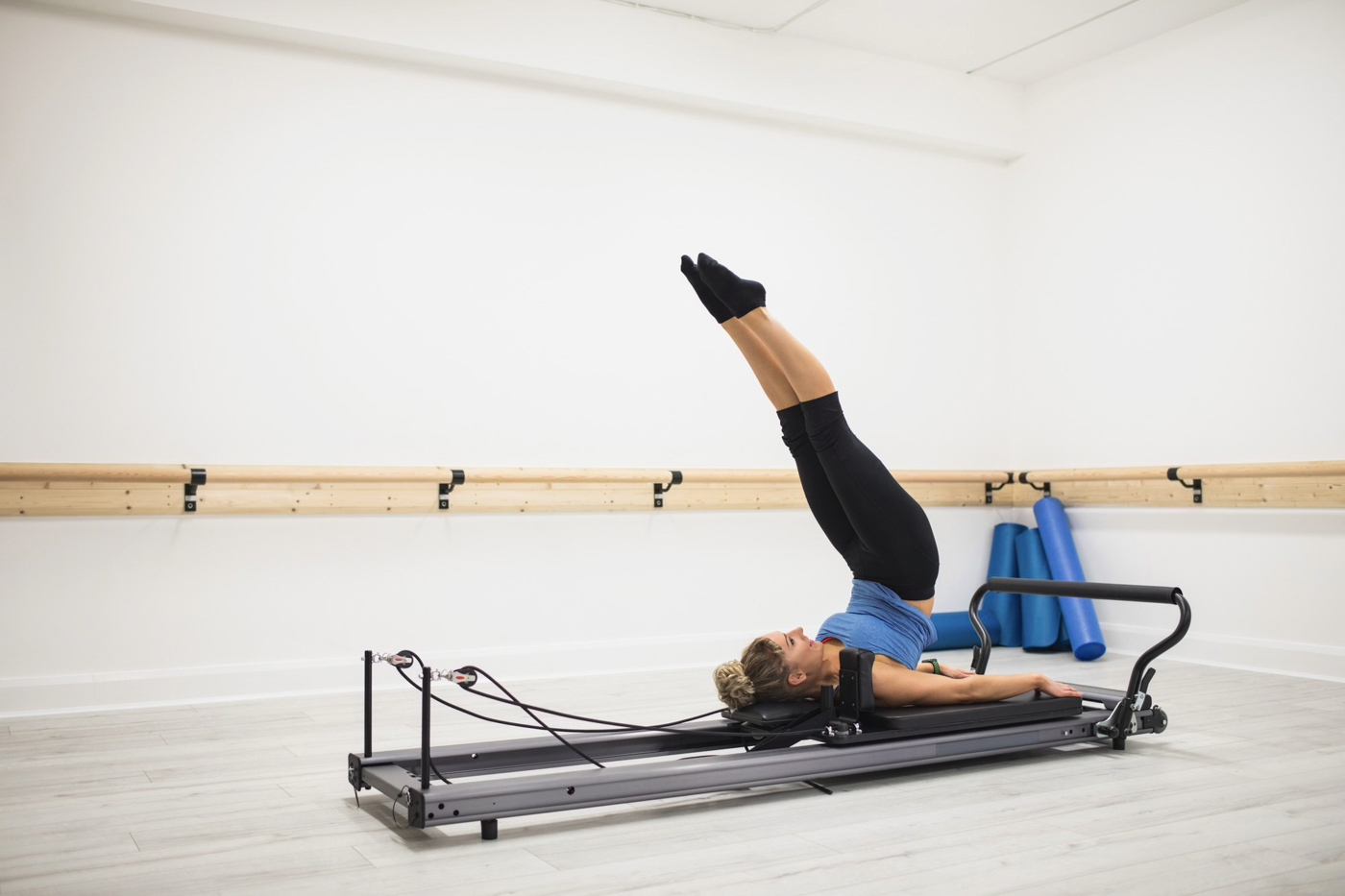
The biggest difference is resistance. In pilates on the wall, your body weight, gravity, and the wall create the challenge. A Reformer uses a moving carriage, straps, footbar, and springs. Those springs can make an exercise lighter for support or heavier for strength training.
Neither option is “better” for every person. The best choice depends on your experience, goals, form, and access to quality instruction. For many active Miami residents, a mix of both can keep workouts fresh while supporting stronger movement on the beach, at work, and during everyday life.
What Builds Strength in Pilates?
Pilates strength training is not only about lifting the heaviest resistance possible. It also develops control. You learn to activate the deep core, glutes, shoulders, hips, and back while maintaining steady alignment.
Strength improves when muscles work against enough resistance, with good technique, over time. This is called progressive overload. Reformer Pilates makes progression easy because an instructor can change spring tension, range of motion, exercise position, and tempo. Wall Pilates can progress too, but it has fewer ways to increase resistance without adding props such as bands, balls, or light weights.
For a stronger foundation before trying more advanced variations, consider a Pilates class for beginners at Backstage Pilates. Learning the fundamentals first helps you get more from every exercise, whether you train on a wall, mat, or Reformer.
How Wall Pilates Builds Functional Strength
Wall Pilates uses a stable wall as a point of contact. You may place your feet on it during bridges, press your hands into it for plank variations, or use it to guide alignment during standing exercises. It looks simple. Then it starts to burn.
Key Wall Pilates Benefits
One of the leading wall Pilates benefits is body awareness. The wall gives immediate feedback. If your ribs flare, pelvis twists, shoulders rise, or weight shifts unevenly, you can often feel it right away.
This setup is especially useful for building:
- Core endurance: Wall-supported leg work and abdominal exercises require the deep stabilizers to stay engaged.
- Glute and leg strength: Bridges, wall sits, squats, and single-leg presses can wake up the lower body.
- Shoulder stability: Wall push-ups and plank variations teach the shoulder blades to move with control.
- Balance and coordination: Standing wall exercises challenge posture while limiting excessive momentum.
Wall work can be a smart choice when you want a low-impact workout at home or need a simple way to practice Pilates alignment. It can also help beginners feel more secure because the wall provides a clear physical reference.
Where Wall Pilates Has Limits
Wall Pilates does not include the smooth, adjustable spring resistance found on a Reformer. That matters if your goal is significant muscular strength, especially in the upper body and legs.
For example, a wall squat challenges your quads and glutes through body weight and time under tension. A Reformer squat or footwork series can use heavier springs, different foot positions, and single-leg variations to create a more precise strength challenge. The wall cannot replace that range of loading on its own.
Still, more resistance is not automatically more effective. Poor form with heavy resistance can move stress into the neck, lower back, or hips. Slow, intentional wall exercises can be demanding and valuable when performed with good technique.
Try This Wall Pilates Form Tip
During a wall bridge, press evenly through both feet and imagine gently pulling your heels toward your hips without actually moving them. This can help engage the hamstrings and glutes. Keep your ribs soft, avoid over-arching your lower back, and move slowly enough to feel the work.
Why Reformer Pilates Creates More Strength Options
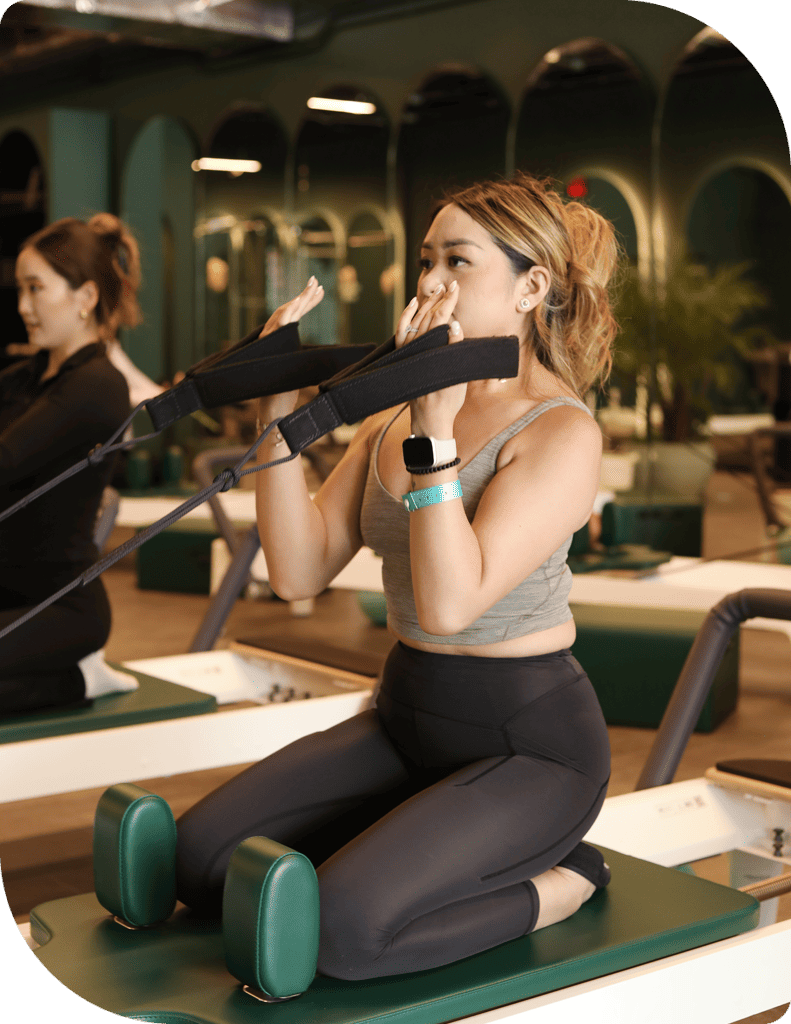
Reformer Pilates is often the stronger choice for people who want a structured progression. The machine’s springs provide resistance in both pressing and pulling movements, helping you train muscles through a controlled range of motion.
A major advantage is versatility. You can work your legs with footwork, your back with rows, your arms with chest presses, and your core with carriage-stability exercises—all in one session. The moving carriage also asks your body to stabilize while it moves.
Springs Change the Pilates Equipment Comparison
In a practical pilates equipment comparison, springs are the feature that sets the Reformer apart. They create adjustable resistance without the impact of jumping or heavy free weights. This is ideal for people who want strength work that feels supportive on the joints.
Springs can also assist movement. That is important for beginners, people returning after time away from exercise, and clients rebuilding confidence after an injury with clearance from a medical professional. In other exercises, the springs increase the workload. A knowledgeable instructor chooses resistance that challenges you without sacrificing form.
At Backstage Pilates, Reformer Pilates classes offer a full-body approach that can be adapted for different fitness levels. Expect focused coaching, controlled movement, and progressions that meet you where you are.
Strength Benefits Beyond the “Pilates Burn”
Reformer training can improve muscular endurance, posture, hip stability, mobility, and core strength. It may also support better performance in other activities Miami locals love, from paddleboarding and tennis to running along the waterfront.
The strength is functional. Rather than isolating one muscle at a time, many Reformer exercises teach your body to coordinate the core, hips, and shoulders together. You may notice that carrying groceries, sitting taller at your desk, or climbing stairs feels easier over time.
For more personalized resistance choices and technique feedback, private Pilates training can be an excellent next step. A one-on-one session allows the instructor to tailor spring settings and exercises to your body, movement history, and goals.
Choosing the Right Workout for Your Goals
Choose wall Pilates if you want accessible, low-impact movement, a convenient home practice, or extra help understanding alignment. It is also a useful complement to studio workouts, particularly on busy South Florida days when getting to class is not realistic.
Choose Reformer Pilates if you want more ways to build strength progressively, train your whole body with equipment, or receive hands-on guidance in a small-group setting. It is particularly effective when you attend consistently and gradually increase the challenge.
A Simple Plan for Better Results
For noticeable Pilates strength training results, aim for two to four sessions each week, depending on your schedule and recovery. Combine one or two Reformer sessions with wall Pilates or mat practice at home. Walk, swim, or enjoy other movement you love, too.
Focus on quality. Exhale with effort. Keep your neck relaxed. Move with control instead of rushing through repetitions. If an exercise causes sharp pain, stop and ask an instructor for another option.
Ready to build strength with expert guidance? Explore the Pilates Power class at Backstage Pilates for a more dynamic, energizing workout designed to challenge your body while keeping the Pilates principles of control, precision, and mindful movement at the center.
How to Get Stronger With Wall Pilates or Reformer Pilates
The most effective workout is the one you can practice consistently. Whether you choose pilates on the wall at home or attend Reformer sessions in a Miami studio, regular practice matters more than chasing the hardest exercise on day one.
For most people, strength develops through steady progress. Start with movements you can control, then increase the challenge as your posture, balance, and confidence improve. That might mean adding a stronger Reformer spring, holding a wall squat longer, slowing down your repetitions, or trying a single-leg variation.
Use Progressive Overload Without Losing Form
Progressive overload means gradually asking your muscles to do more. In Pilates, “more” does not always mean heavier. It can also mean better control, a larger range of motion, fewer breaks, or improved stability.
On a Reformer, an instructor may increase spring tension for leg presses, rows, or arm work. They may also reduce spring assistance during balance-based exercises, requiring your core to work harder to control the moving carriage.
With wall Pilates, you can progress by changing your position. For example, begin with both feet on the wall during a bridge. Later, lift one foot for a single-leg bridge or add a resistance band around your thighs. Small changes create a major difference.
Signs You Are Ready to Progress
- You can complete an exercise without holding your breath or tensing your neck.
- Your pelvis and ribs stay stable during core work.
- You feel muscle fatigue without sharp joint pain.
- You can maintain the same quality through every repetition.
If your lower back takes over during bridges or your shoulders creep toward your ears in plank work, the answer is not always more resistance. Often, it is a sign to adjust your setup. Strong Pilates movement begins with smart alignment.
Train Different Types of Strength
A good pilates strength training routine develops more than one type of fitness. Reformer Pilates is particularly effective because it can combine strength, muscular endurance, mobility, stability, and coordination in the same class.
Wall Pilates is excellent for isometric strength, which means holding a position without moving much. Think wall sits, plank variations, or pressing your feet firmly into the wall during abdominal exercises. These holds can build endurance in the core, glutes, thighs, and shoulders.
Reformer Pilates also trains concentric and eccentric strength. In simple terms, your muscles work while pushing the carriage away and while controlling it back in. That controlled return is valuable. It teaches the body to absorb force, stay stable, and move with less strain.
For a closer look at the machines and props that support this training style, explore the Backstage Pilates Pilates equipment guide. Understanding how each tool works can make your classes feel less intimidating and more productive.
Wall Pilates vs Reformer for Different Fitness Levels
The wall Pilates vs Reformer decision can change as your experience grows. Both methods can serve beginners, experienced athletes, and people returning to movement after a break. The key is choosing the right exercise level and receiving quality guidance.
For Pilates Beginners
Wall Pilates can feel approachable because the wall gives you feedback. You have a firm surface to press into, which may make it easier to understand neutral posture, foot placement, and shoulder alignment. It is a simple entry point for learning how to engage your deep core without rushing.
However, beginners should not assume wall work is always easy. A long wall sit or slow single-leg sequence can be intense. Start with shorter sets. Focus on breathing. Let your control improve before adding extra repetitions.
Reformer Pilates may look more advanced, but it can also be beginner-friendly. The springs can support your movements, while the carriage helps you learn smoother motion. A skilled instructor can show you how to get on and off the machine, adjust the footbar, and select safe spring settings.
If you are new to studio workouts, review the Pilates beginner’s guide before your first class. A little preparation helps you arrive feeling comfortable, focused, and ready to move.
For Experienced Movers and Athletes
More experienced clients often benefit from the wider loading options of Reformer Pilates. Athletes can use springs, straps, long-lever positions, unilateral exercises, and slower tempos to create a meaningful strength challenge without the repetitive impact of some traditional workouts.
This can be especially useful for Miami runners, cyclists, tennis players, golfers, and water-sports enthusiasts. Strong hips, stable shoulders, and a responsive core can support better mechanics in the activities you already enjoy.
Wall Pilates still has a place. It can be a great recovery-day practice, a travel-friendly workout, or a way to refine mechanics between studio sessions. Use the wall to check symmetry during squats, improve ankle mobility, and practice shoulder positioning before progressing to more demanding Reformer exercises.
Practical Tips for Better Pilates Strength Results
Whether you train in an air-conditioned South Florida studio or do pilates on the wall in your living room, a few habits can improve your results.
Prioritize Your Setup
Take a moment to position your feet, pelvis, ribs, and head before each exercise. It seems basic. It works.
On the Reformer, check that your feet are even on the footbar and that your shoulders are relaxed against the shoulder rests. During wall Pilates, distribute pressure evenly through your hands or feet instead of leaning heavily into one side.
Match Your Breath to the Movement
Breath is not just a calming detail. It helps organize effort. In many Pilates exercises, you exhale during the most challenging part of the movement, such as pressing the carriage out or lifting into a bridge. Then inhale as you return with control.
Avoid holding your breath when the work gets difficult. Breath-holding can make your neck and jaw tense, reducing the deep core connection you are trying to build.
Recover Like It Matters
Strength gains happen during recovery, not only during class. Miami’s year-round active lifestyle makes it easy to overdo it, especially if you are combining Pilates with beach walks, gym sessions, pickleball, or weekend outings.
Hydrate well in the South Florida heat, eat enough protein and nutrient-rich meals, and leave room for rest. Gentle stretching and walking can help when your muscles feel tired. If soreness lasts several days or you feel joint pain, reduce intensity and speak with a qualified professional.
Choose the Pilates Practice That Keeps You Moving
In a straightforward pilates equipment comparison, the Reformer provides more ways to increase resistance and build full-body strength. Its springs, straps, and moving carriage make it easier to progress over time while training the core, legs, arms, back, and posture.
Wall Pilates benefits include convenience, alignment feedback, and low-impact core and lower-body work. It is a valuable practice for home workouts, travel, active recovery, and anyone who wants to improve body awareness.
The strongest approach may be using both. Enjoy wall Pilates when you need a simple, accessible session, then use Reformer Pilates for coached progression and more varied resistance. This combination can support a strong, capable body for workdays, weekends, and every active moment Miami has to offer.
Ready to put your goals into action? View the Backstage Pilates class schedule and find a welcoming Miami Pilates class that fits your experience level, routine, and strength goals.