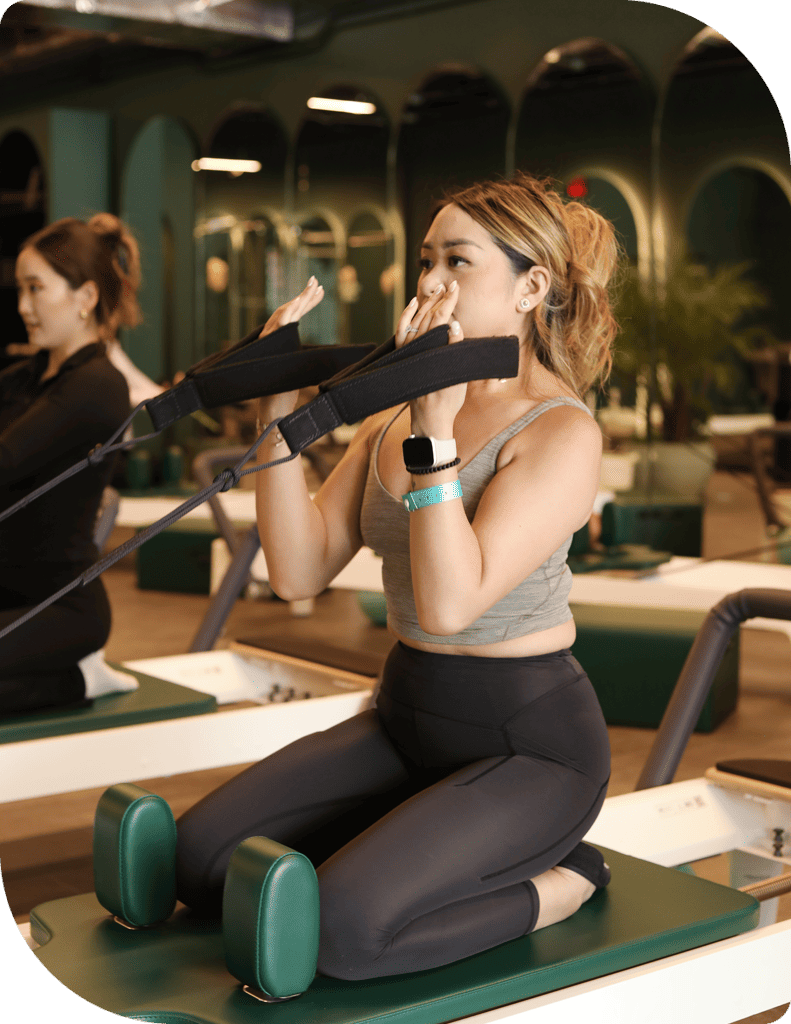
Your first Reformer Pilates class can feel exciting, unfamiliar, and a little intimidating. Learn what the machine does, how a beginner Reformer class flows, what to wear, and how to feel confident from your first spring-assisted movement to your final stretch.
What’s a Reformer, and Why Is It So Effective?
If you are wondering, “what’s Reformer Pilates?” or searching for whats reformer before booking, the simple answer is this: a Reformer is a Pilates machine that adds support and resistance to your workout.
It has a sliding platform called a carriage, adjustable springs, straps, a footbar, and shoulder rests. The springs create resistance, but they can also assist your movement. That makes the machine useful for people at many fitness levels, from total beginners to experienced athletes.
Reformer Pilates is not about moving as fast as possible or lifting the heaviest weight. It is about controlled strength. You will use your core, hips, glutes, arms, legs, and smaller stabilizing muscles while paying close attention to your alignment and breath.
For Miami residents who balance long workdays, beach weekends, running, cycling, or busy social calendars, this focused approach can be a smart way to build strength without putting extra stress on the joints. The workout may look smooth. It can still challenge you deeply.
Why beginners often love the Reformer
A beginner Reformer workout is adjustable. Your instructor can change spring resistance, offer variations, and help you find a range of motion that feels right for your body. You do not need prior dance training, extreme flexibility, or a “Pilates body” to begin.
The machine also provides feedback. When the carriage moves, you can feel whether you are pushing evenly through both feet, keeping your hips stable, or letting your shoulders tense up. That awareness is one of the biggest benefits of Pilates.
Want a closer look at the method before class? Read what Pilates is and how it works to understand the core principles behind each exercise.
What to Expect at Your First Reformer Class
Your first Reformer class should feel welcoming, not overwhelming. At Backstage Pilates, the goal is to help you learn the equipment, understand the movement, and leave feeling stronger than when you arrived.
Before class begins
Arrive a few minutes early, especially if this is your first Pilates class. Let the instructor know that you are new to the Reformer and share any injuries, pregnancy-related considerations, recent surgeries, or areas that feel sensitive. Clear communication helps your instructor offer safer, more useful modifications.
Wear comfortable workout clothes that allow you to move. Fitted clothing is usually best because it helps the instructor see your alignment. Grip socks are commonly required for safety and stability. Bring water, but skip heavy jewelry or anything that may get in the way while lying down.
You do not need to bring equipment. The studio will provide the Reformer and props, such as a Pilates ring, ball, or light hand weights when needed.
The setup and safety overview
At the beginning of a reformer Pilates for beginners session, your instructor will show you how to get on and off the machine safely. You may learn the names of a few parts, including the carriage, footbar, springs, straps, and headrest.
Don’t worry about memorizing everything. Your instructor will guide you step by step.
Spring settings matter. A heavier spring does not always mean an exercise is harder, and a lighter spring does not always make it easier. Depending on the movement, springs can increase challenge, improve stability, or provide helpful support. Never change springs unless your instructor tells you to do so.
How the workout usually flows
Every class has its own style, but most beginner sessions follow a clear progression:
- Breath and body awareness: You may start by finding a neutral spine, relaxing your shoulders, and connecting to your deep core.
- Footwork: Lying on your back, you press the carriage away with your feet. This warms up the legs and teaches control.
- Core and hip work: Expect exercises that target the abdominals, glutes, pelvic stability, and posture muscles.
- Arms and straps: You may pull straps while seated, kneeling, or lying down to build upper-body strength and shoulder stability.
- Mobility and stretching: The final minutes often include slower movements to open the hips, spine, hamstrings, and chest.
Explore our Reformer Pilates classes when you are ready to experience this full-body format in a supportive Miami studio environment.
What Your Body May Feel During and After Class
When people ask what to expect Pilates to feel like, the honest answer is: you will probably notice muscles you do not usually think about. Your deep abdominals may shake. Your inner thighs may work hard. Simple-looking movements can be surprisingly intense.
That is normal. Pilates asks you to move with precision instead of momentum.
Muscle fatigue is normal; sharp pain is not
A healthy challenge may feel like warmth, effort, gentle shaking, or muscle fatigue. Sharp pain, pinching, dizziness, numbness, or joint pain should never be pushed through. Stop and tell your instructor right away.
Good Pilates is not about suffering for results. It is about learning how your body moves and building strength over time.
You may be sore in unexpected places
After your first Reformer class, you may feel mild soreness in your core, glutes, arms, or thighs within the next day or two. Hydrate well, take a walk, and give your body time to recover. South Florida’s warm weather makes outdoor movement easy, but remember that recovery counts as part of your fitness routine too.
Many people also feel taller and less tense after class. That comes from improved posture awareness, mobility work, and the focused breathing used throughout the session.
Simple Tips for a Better Beginner Reformer Experience
You do not need to be perfect in your first class. You simply need to be present, curious, and willing to learn.
Focus on these three things
Listen to the cue. Pilates uses detailed instructions, such as “keep your ribs soft” or “press through your heels.” If a cue does not make sense, ask. Chances are someone else has the same question.
Choose control over range. A smaller, well-aligned movement is more valuable than a large movement that causes you to lose form. This is especially important in a beginner Reformer class.
Breathe consistently. Holding your breath creates tension. Use your inhale to prepare and your exhale to gently engage your core during effort.
Start with the right class level
Beginning with an appropriate level builds confidence and protects your progress. Our Pilates Classic Beginners classes offer a friendly foundation for learning Pilates principles, alignment, and controlled movement.
If you want more personalized attention, private Pilates training can be an excellent option before or alongside group classes. It gives you time to ask questions, work around specific needs, and become comfortable with the equipment.
Your first Reformer class is the beginning, not a test. With consistent practice, you can build strength, mobility, balance, and confidence that supports every part of your active Miami lifestyle.
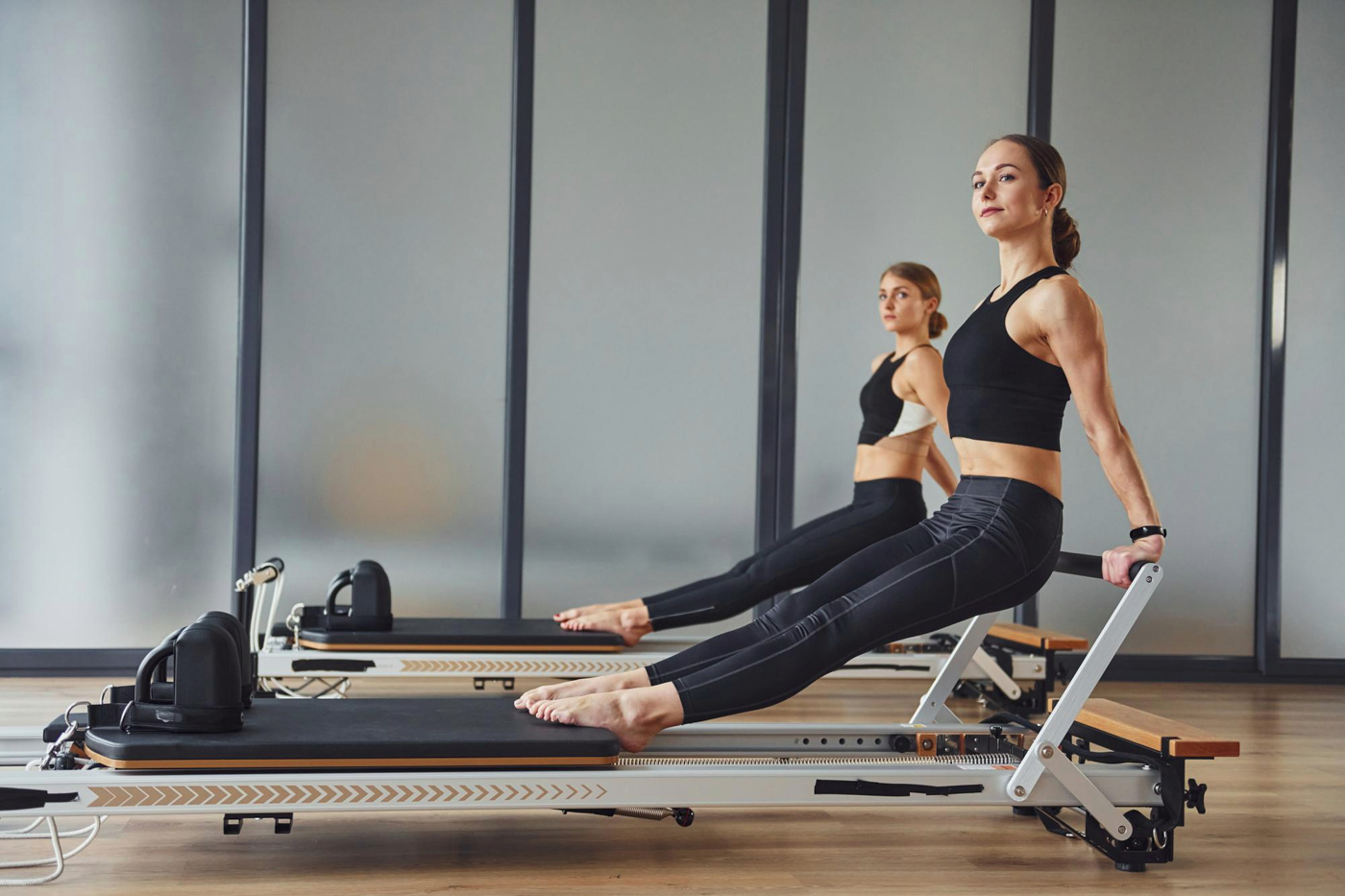
How to Prepare for Your First Pilates Class in Miami
A little preparation can make your first Reformer class feel much easier. You do not need special fitness experience, but arriving with a calm mindset and a few basics in place helps you focus on the movement instead of the unfamiliar details.
Eat and hydrate wisely
Try to have a light meal or snack about one to two hours before class. Think fruit, yogurt, eggs, toast, or a smoothie with protein. Avoid arriving overly full, since many Reformer Pilates exercises involve lying down, bending, and controlled core work.
Hydration matters in Miami. Even if you spend most of your day indoors, South Florida heat and humidity can leave you feeling depleted. Drink water before class and bring a bottle for afterward. An air-conditioned studio is comfortable, but your muscles still work hard.
Wear clothes that let you move
Choose leggings, bike shorts, or fitted workout pants with a supportive top. Loose clothing can shift while you are moving your legs overhead or using the straps, making it harder for your instructor to check your alignment.
Grip socks are an important part of a beginner Reformer experience. They help your feet stay secure on the carriage and footbar while keeping the studio environment clean. If you are unsure about what to bring, review our Pilates class preparation tips before you arrive.
Bring questions, not pressure
You may not understand every Pilates term on day one. That is completely normal. A first Pilates class is for learning. Ask your instructor to repeat a setup, explain a spring change, or offer an option that feels better for your body.
Experienced practitioners still ask questions too. Pilates is a practice, not a performance. The more clearly you understand your movement, the more you can get from every class.
Common First Reformer Class Questions, Answered
If you have searched “whats Reformer?” or watched a class online, you may have noticed that the machine looks more complicated than it feels once an instructor walks you through it. The Reformer is designed to support purposeful, low-impact movement.
Will I be able to keep up?
Yes, especially when you choose a class that matches your current level. In reformer Pilates for beginners, instructors provide cues, demonstrations, and modifications throughout the session. You are not expected to know the order of exercises or move at the same range as everyone else.
Some people move more slowly. Others take a break. Both are okay.
Your goal is not to copy the person on the next machine. It is to work with good form, breathe steadily, and notice how your body responds. Over time, the movements become more familiar and your confidence grows.
Do I need to be flexible?
No. Flexibility is not an entry requirement for a first Reformer class. In fact, many people begin Pilates because they feel tight in their hips, shoulders, hamstrings, or back.
The Reformer can make stretching more accessible because the carriage and straps offer support. Rather than forcing a position, you will gradually build mobility while also strengthening the muscles that help you control that range.
Is Reformer Pilates a good workout?
Absolutely. The pace may feel different from a boot camp or a run along Miami Beach, but the challenge is real. A thoughtful Reformer workout can improve muscular endurance, core strength, posture, balance, coordination, and joint stability.
You may finish class feeling energized rather than drained. That is one reason Pilates works well alongside other active pursuits, including tennis, golf, cycling, strength training, and long walks around South Florida.
What if I have an injury or physical limitation?
Tell your instructor before class starts. Pilates can often be adapted for common concerns, but your instructor needs the information to guide you appropriately. If you are recovering from an injury, surgery, or managing ongoing pain, speak with your healthcare provider first.
For more individualized support, consider scheduling a private Pilates training session. Private instruction can help you learn the equipment at your own pace while receiving focused feedback and customized movement options.
How to Build Confidence After Your First Reformer Class
The best way to feel comfortable on the Reformer is simple: come back. Your first class introduces the machine. Your next few sessions help the exercises make sense.
Give yourself time to learn
During your first Reformer class, you may spend mental energy remembering foot positions, breathing cues, and transitions. By class three or four, those details often start to feel more natural. That leaves more attention for your posture, core connection, and quality of movement.
Consistency matters more than intensity. One or two classes per week can create a strong foundation, especially when paired with walking, recovery, and nourishing meals.
Track the wins that matter
Progress is not always about a tougher spring setting or a more advanced exercise. Notice whether you stand taller, feel steadier on one leg, have less shoulder tension, or recover faster after a busy day. These practical changes are meaningful.
Many Miami clients also appreciate having a dedicated hour away from screens, traffic, and packed schedules. Pilates asks you to focus on the present moment. That mental reset can be just as valuable as the physical work.
Try different class formats as you progress
Once you feel comfortable with a beginner Reformer routine, you may want to explore classes that emphasize strength, stretch, cardio, or more advanced sequencing. Building variety can keep your routine interesting while helping you develop a balanced fitness practice.
Browse the full Pilates class schedule and formats to find an option that fits your goals, availability, and experience level. A knowledgeable instructor can also help you decide when you are ready to progress.
Your Reformer Journey Starts With One Class
Your first Pilates class does not need to be perfect. You may forget a cue, feel your legs shake during footwork, or need help adjusting your straps. Those are all normal parts of learning.
What matters is that you begin. Reformer Pilates offers a smart, adaptable way to build strength, improve mobility, and feel more connected to your body—whether you are new to exercise, returning after time away, or adding focused training to an active Miami lifestyle.
At Backstage Pilates, every first Reformer class is an opportunity to learn in a welcoming, supportive setting. Book a class, arrive curious, and let our team help you discover what consistent Pilates practice can do for your strength, confidence, and everyday well-being.